
Forklift Won’t Start: Common Causes & Troubleshooting
A forklift that suddenly refuses to start can interrupt warehouse, construction, logistics, and industrial operations immediately. However, a forklift that won’t start does not necessarily have a major engine or electrical failure.
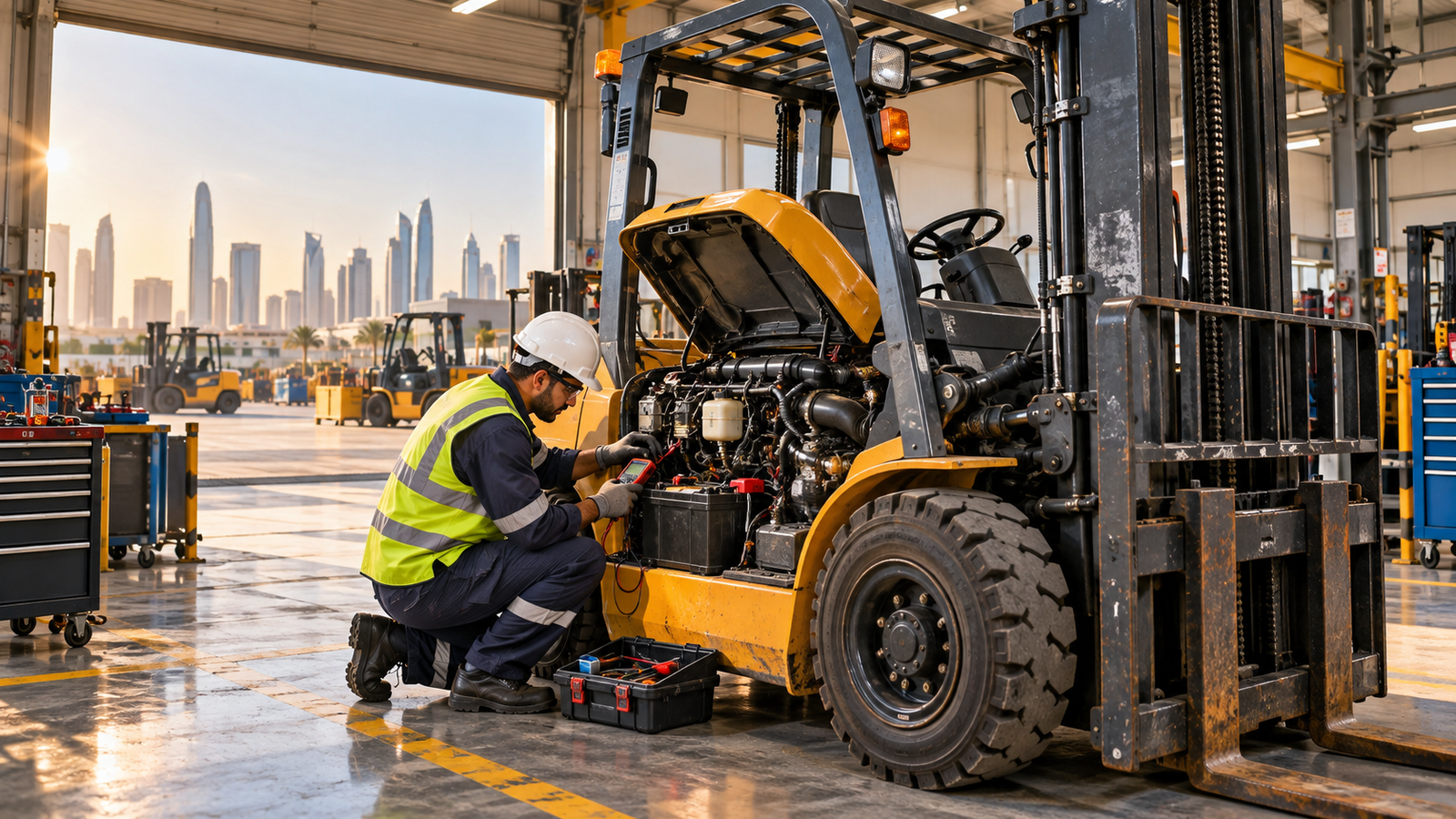
- The first step is to understand exactly what happens when the operator attempts to start the machine.
- Does the forklift have no electrical response? Does the starter motor turn the engine but the engine does not fire? Does the engine start and then stop? Or is an electric forklift powering on but refusing to move?
- These symptoms point toward different diagnostic areas.
- Common causes of forklift starting problems include
- Weak batteries
- Poor electrical connections
- Starter motor faults
- Fuel-system problems
- Restricted air filters
- Safety interlock issues
- Damaged wiring
- Charging-system faults
- And control-system problems.
- The correct approach is therefore not simply to replace a component. A systematic diagnosis should identify the actual cause before repair.
- This guide explains the most common reasons a forklift may not start and provides a structured approach to troubleshooting diesel, LPG, and electric forklift.
01/
What Does “Forklift Won’t Start” Actually Mean?
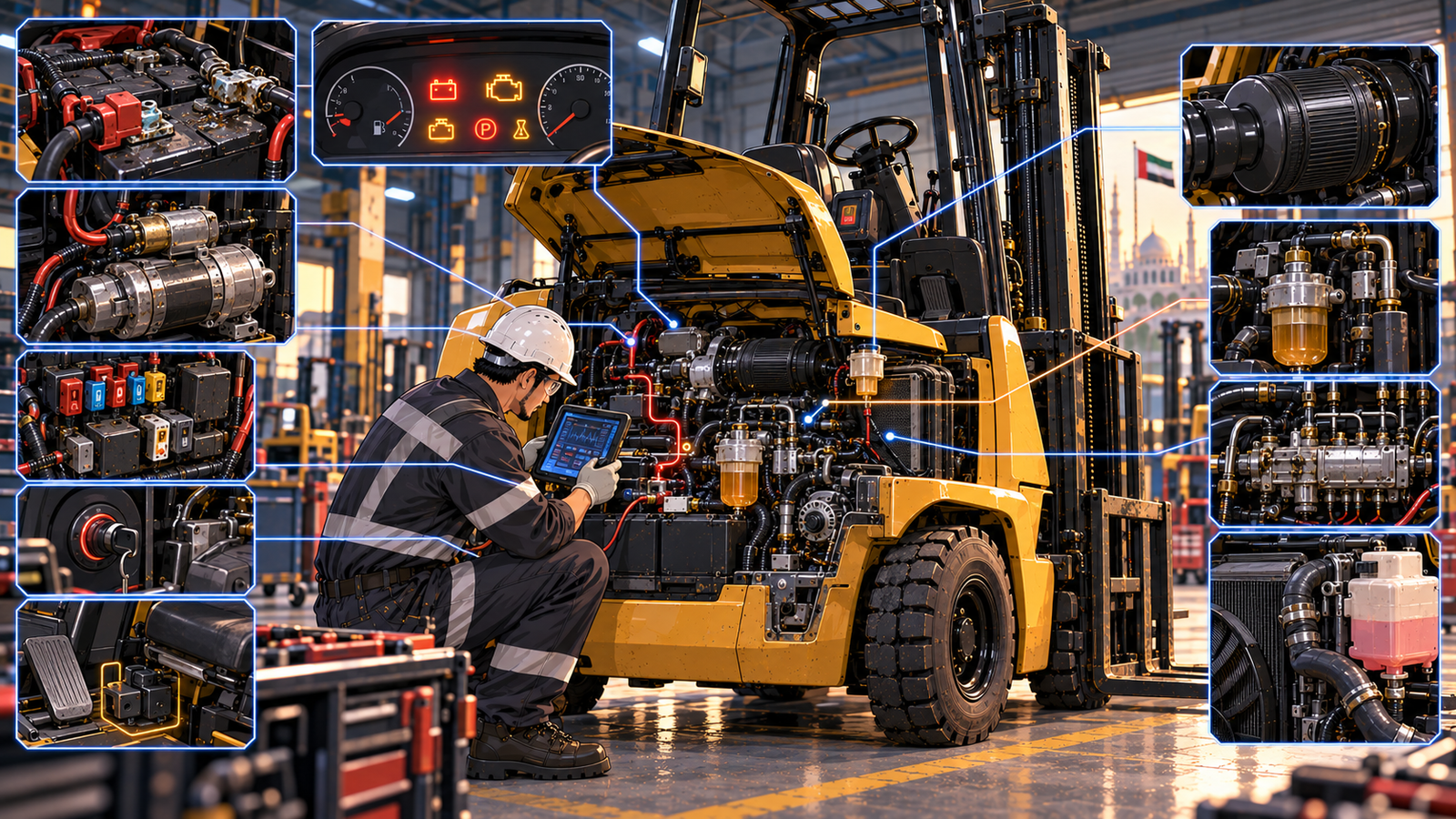
Before troubleshooting, it is important to define the symptom.
A forklift may have several different starting conditions.
- Condition 1: No electrical response
When the key or start control is activated:
- Dashboard does not illuminate
- Warning lights remain off
- No starter response
- No obvious electrical activity
This can indicate a battery, connection, fuse, ignition-switch, or main electrical supply problem.
- Condition 2: Starter operates, but engine does not start
You may hear the starter motor turning the engine, but the engine does not fire. Possible areas include:
- Fuel supply
- Fuel filter
- Fuel pump
- Air intake
- Injection system
- Electrical control system
- Sensors
- Condition 3: Engine starts but immediately stops
This is a different diagnostic condition. Possible causes may include:
- Fuel delivery interruption
- Electrical supply problem
- Safety interlock
- Sensor or control-system issue
- Fuel-system fault
- Condition 4: Engine cranks very slowly
A slow cranking speed can indicate:
- Weak battery
- Poor battery connection
- Corroded terminals
- Damaged battery cables
- Starter motor problem
- Excessive resistance in the starting circuit
- Condition 5: Electric forklift powers on but does not operate
For an electric forklift, powering on does not necessarily mean the machine is ready to drive. Possible causes can include:
- Battery condition
- Charging-related issues
- Safety interlock
- Emergency-stop circuit
- Controller fault
- Drive-system fault
- Fault code
The diagnostic process is therefore different from that of a diesel or LPG forklift.
02/
Common Causes of Forklift Starting Problems
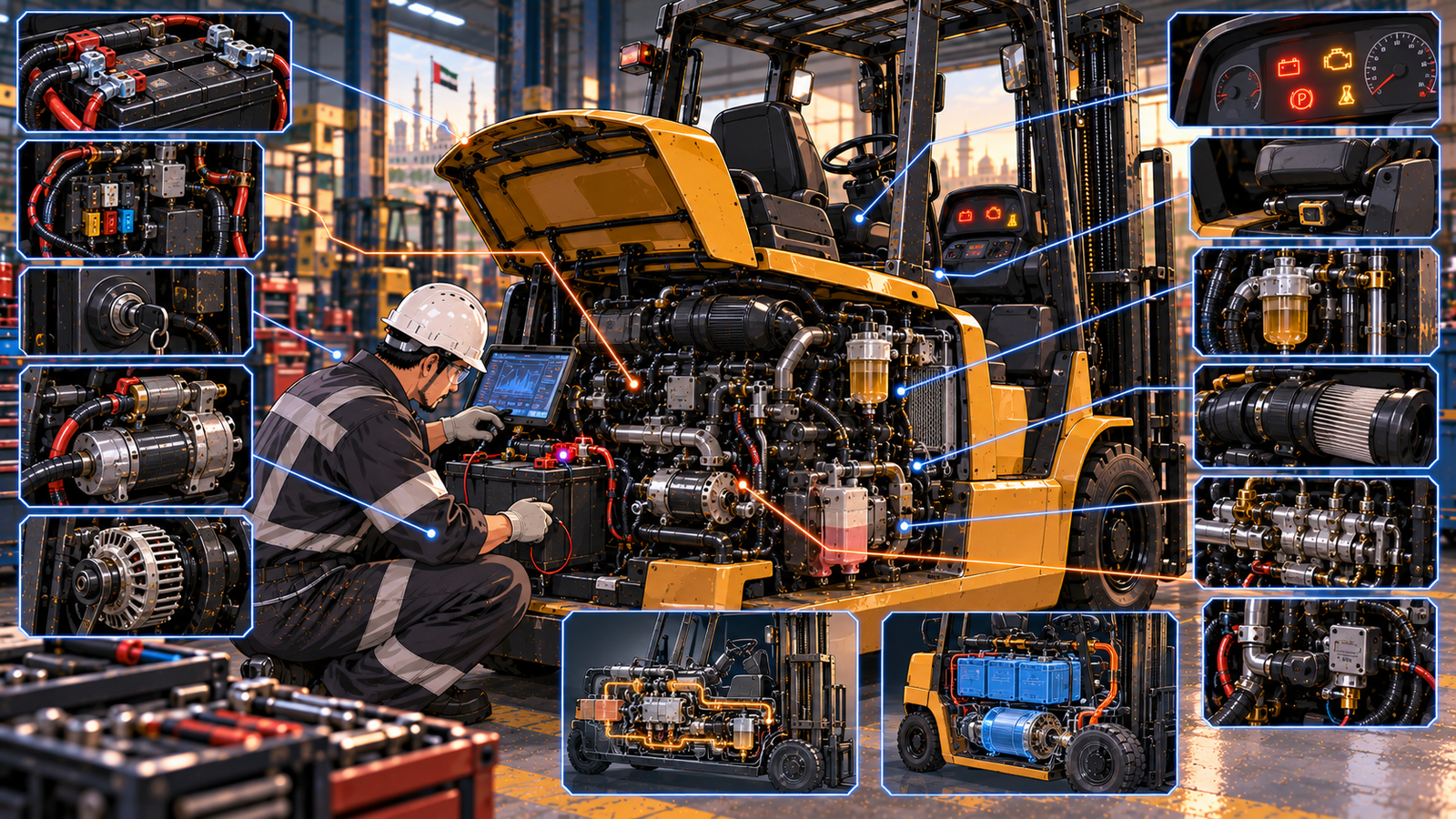
Forklift starting failures can originate from several systems.
The major areas to investigate include:
- Battery and power supply
- Battery terminals and cables
- Starter motor and solenoid
- Ignition and starting circuit
- Fuel system
- Air intake system
- Electrical wiring and fuses
- Safety interlock systems
- Sensors and electronic controls
- Charging system
- Engine mechanical condition
- Controller or drive system on electric forklifts
03/
Forklift Battery Problems
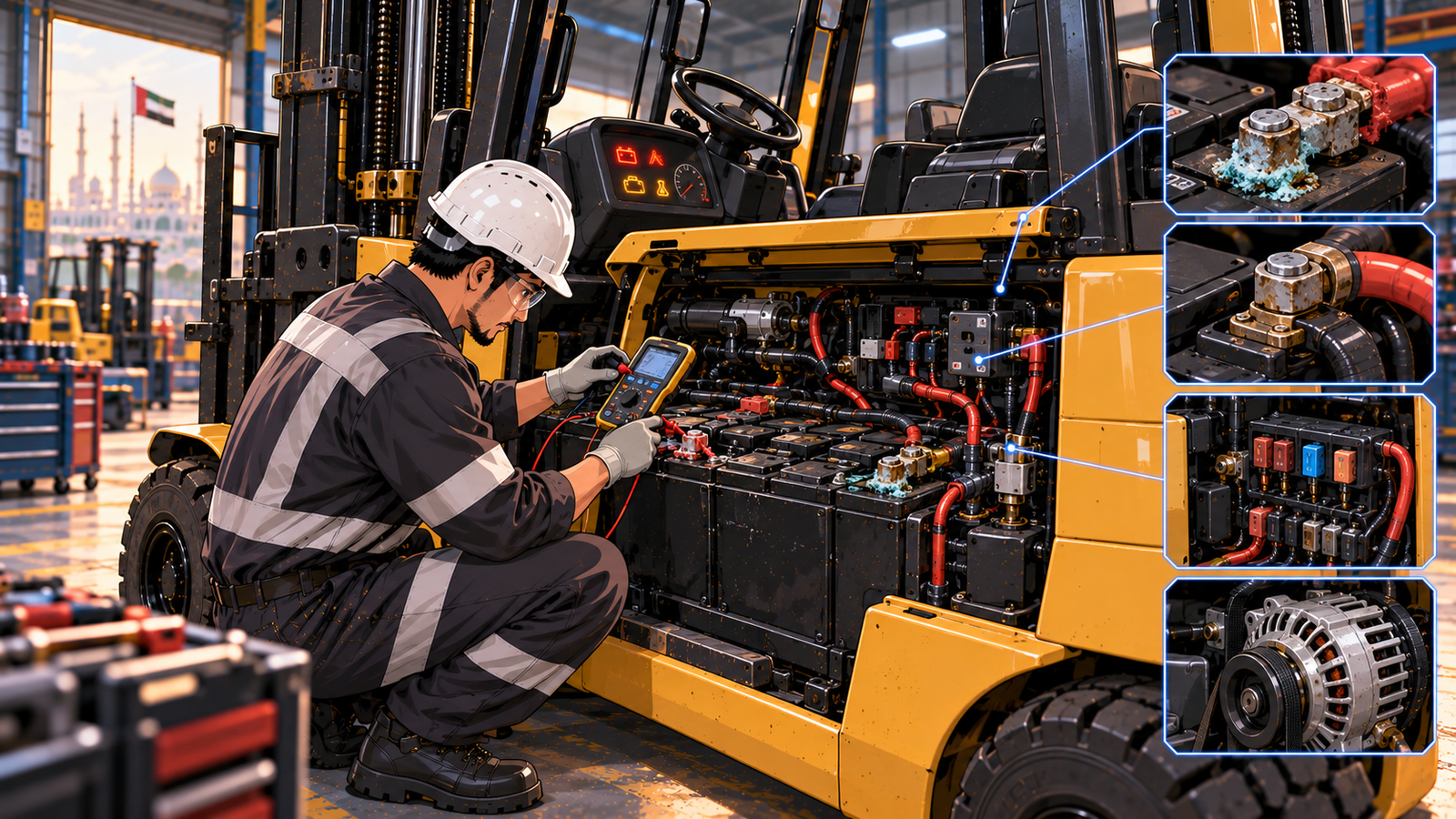
The battery is one of the first areas to inspect when a forklift will not start.
For internal-combustion forklift, the starting battery provides the electrical power required to operate the starter system and other electrical components.
A weak battery may produce symptoms such as:
- Slow engine cranking
- Clicking from the starter area
- Intermittent starting
- Dashboard lights becoming weak
- Complete loss of starting power
Possible battery-related causes
- Low state of charge
- Battery deterioration
- Damaged battery
- Loose terminals
- Corrosion
- Damaged battery cables
- Poor grounding
- Charging-system problems
Simply replacing the battery without checking the charging and starting circuits may not resolve a recurring problem.
04/
Check the Battery Terminals and Connections
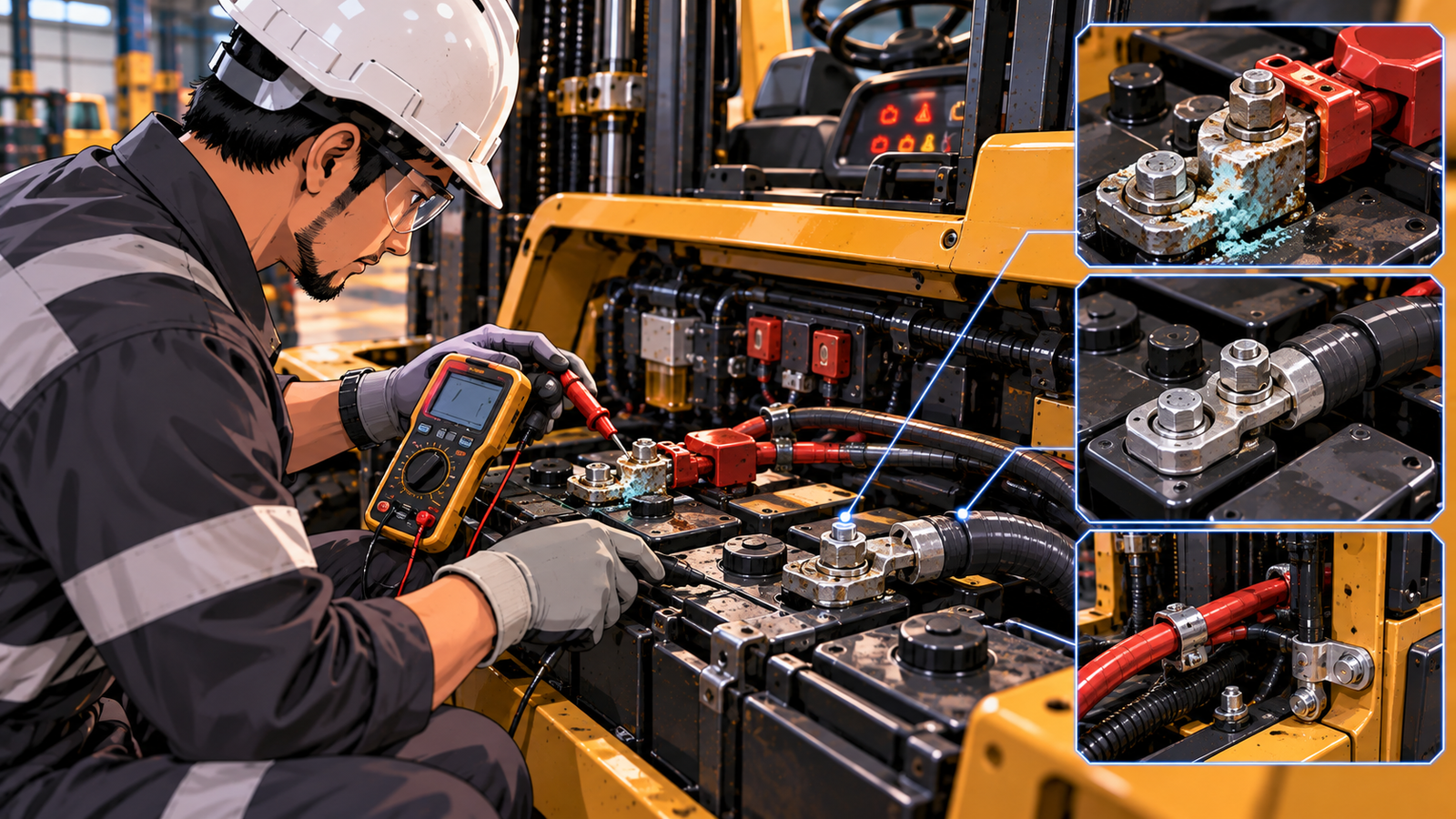
A battery can have adequate charge but still fail to provide sufficient starting power if the electrical connections are poor.
Inspect for:
- Loose battery terminals
- Corrosion
- Damaged cables
- Poor ground connections
- Broken cable ends
- Excessive resistance in the starting circuit
A poor connection can cause voltage drop when the starter attempts to operate.
This is why battery condition and battery connections should be considered separately during diagnosis.
05/
Starter Motor Problems
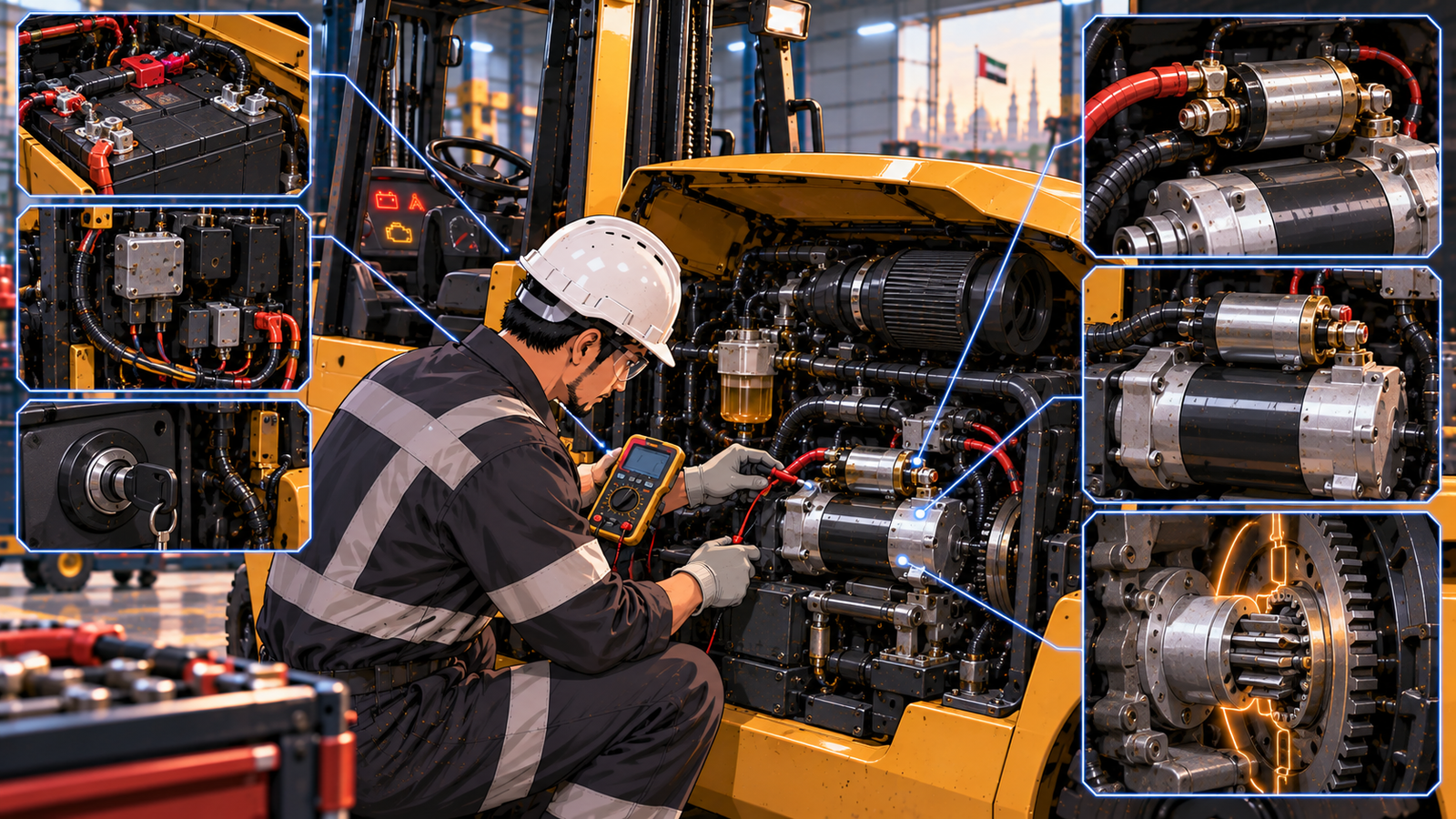
If the forklift has adequate battery power but the engine does not crank properly, the starter circuit should be investigated.
The starting system may include:
- Starter motor
- Starter solenoid
- Relay
- Ignition/start switch
- Wiring
- Fuses
- Ground connections
- Safety interlocks
Common starter symptoms
Click but no cranking
Possible areas include:
- Weak battery
- Poor connection
- Starter solenoid
- Starter motor
- Wiring
Slow cranking
Possible areas include:
- Weak battery
- High electrical resistance
- Damaged cables
- Starter motor condition
- Mechanical resistance
No starter response
Possible areas include:
- Ignition switch
- Fuse
- Relay
- Safety interlock
- Wiring
- Battery supply
- Starter circuit
06/
Forklift Fuel System Problems
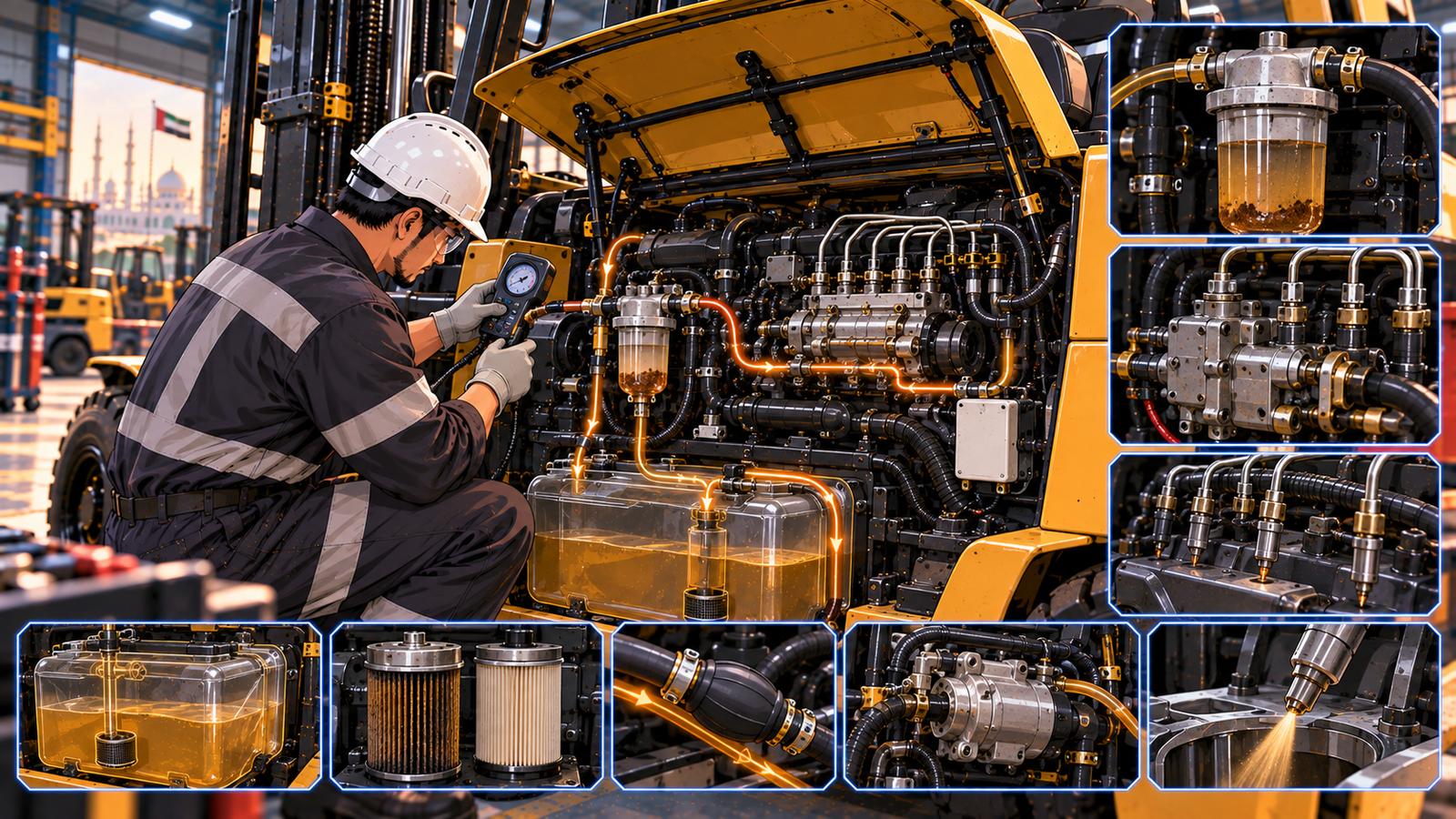
For diesel and LPG forklift, fuel delivery is another major area of investigation.
A forklift engine needs an appropriate supply of fuel and air for combustion.
Potential fuel-system problems include:
- Empty or inadequate fuel supply
- Restricted fuel filter
- Fuel-line restriction
- Air entering the fuel system
- Fuel pump problems
- Contaminated fuel
- Injector-related problems
- Fuel-control issues
Diesel forklift
A diesel forklift that cranks normally but does not start may require inspection of the fuel supply and injection system.
Particular attention may be required if:
- The fuel filter was recently replaced
- The machine ran out of fuel
- The forklift has been unused for an extended period
- Fuel contamination is suspected
- Air has entered the fuel system
07/
LPG Forklift Starting Problems
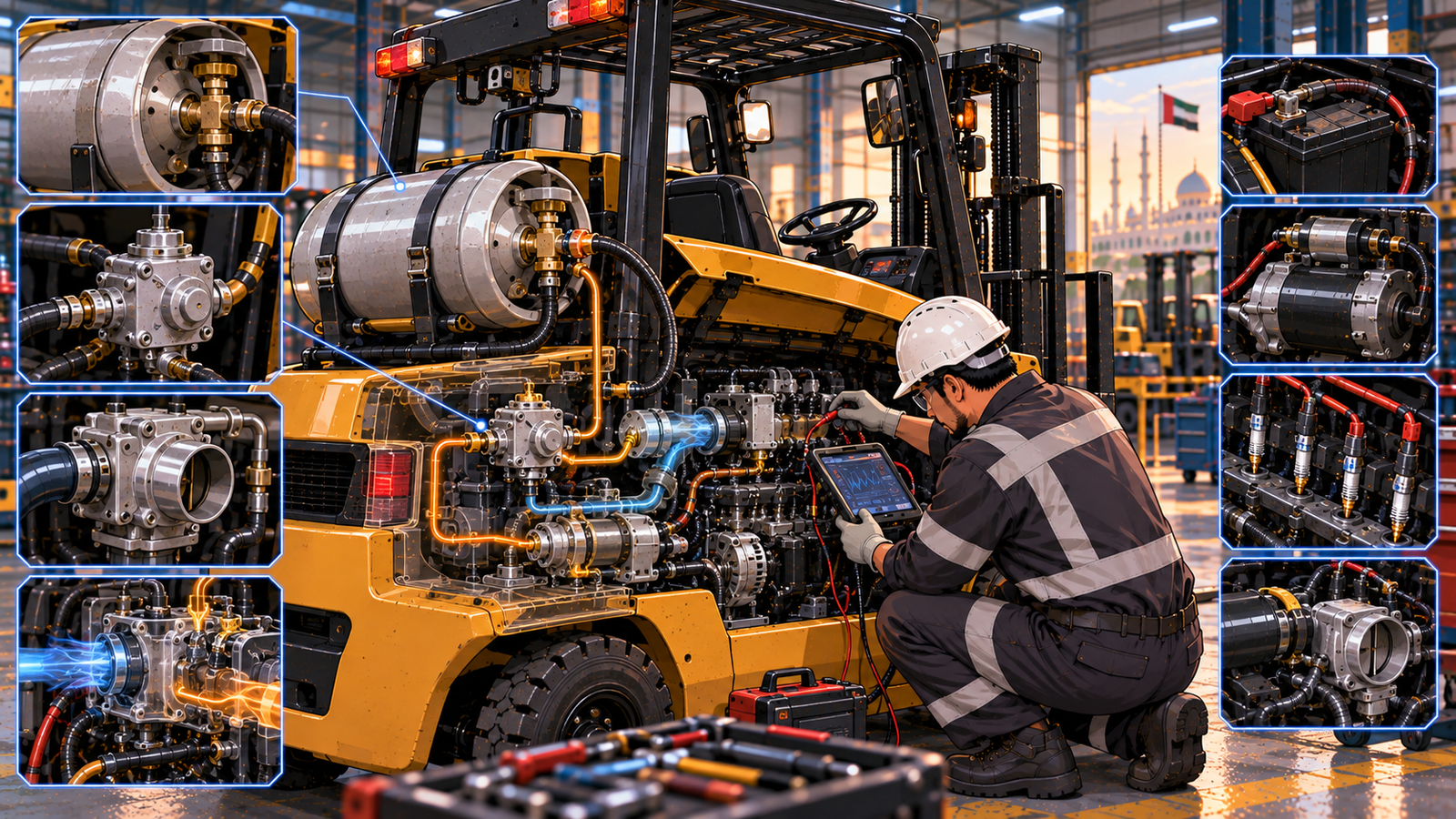
LPG-powered forklift have different fuel-system requirements.
Possible causes of a starting problem can include:
- Fuel supply issues
- LPG regulator problems
- Fuel-system restrictions
- Electrical ignition problems
- Solenoid-related faults
- Incorrect fuel-system operation
Because LPG systems involve pressurized fuel, inspection and repair should be performed using appropriate procedures and equipment.
08/
Air Intake Problems
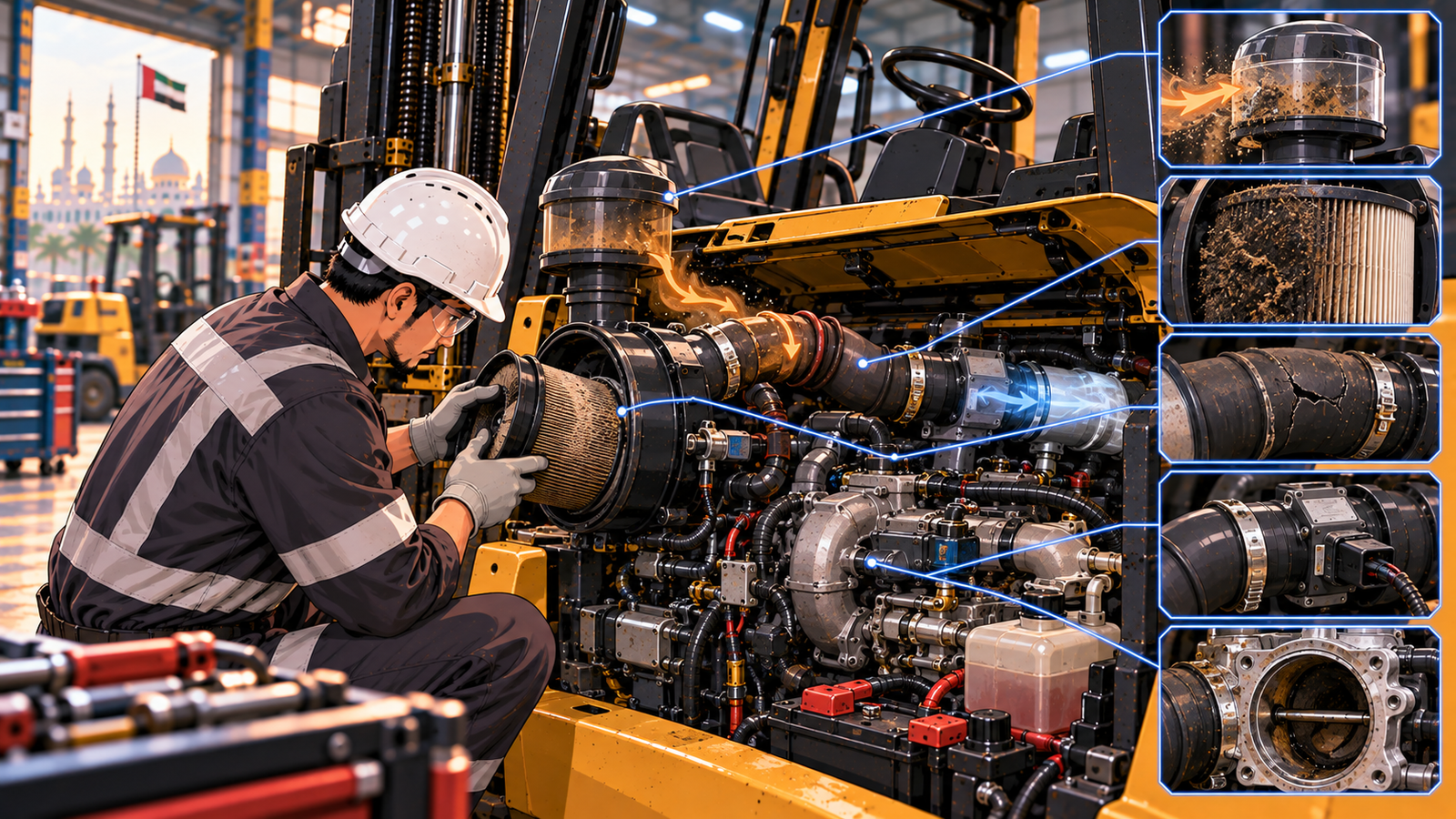
An internal-combustion engine requires adequate airflow for combustion.
A severely restricted air filter or intake system can affect engine starting and performance.
Inspect:
- Air filter
- Air intake hose
- Air cleaner housing
- Intake connections
- Visible restrictions
A dirty or restricted filter may also contribute to poor engine performance, reduced power, and increased operating problems.
09/
Electrical and Ignition Problems
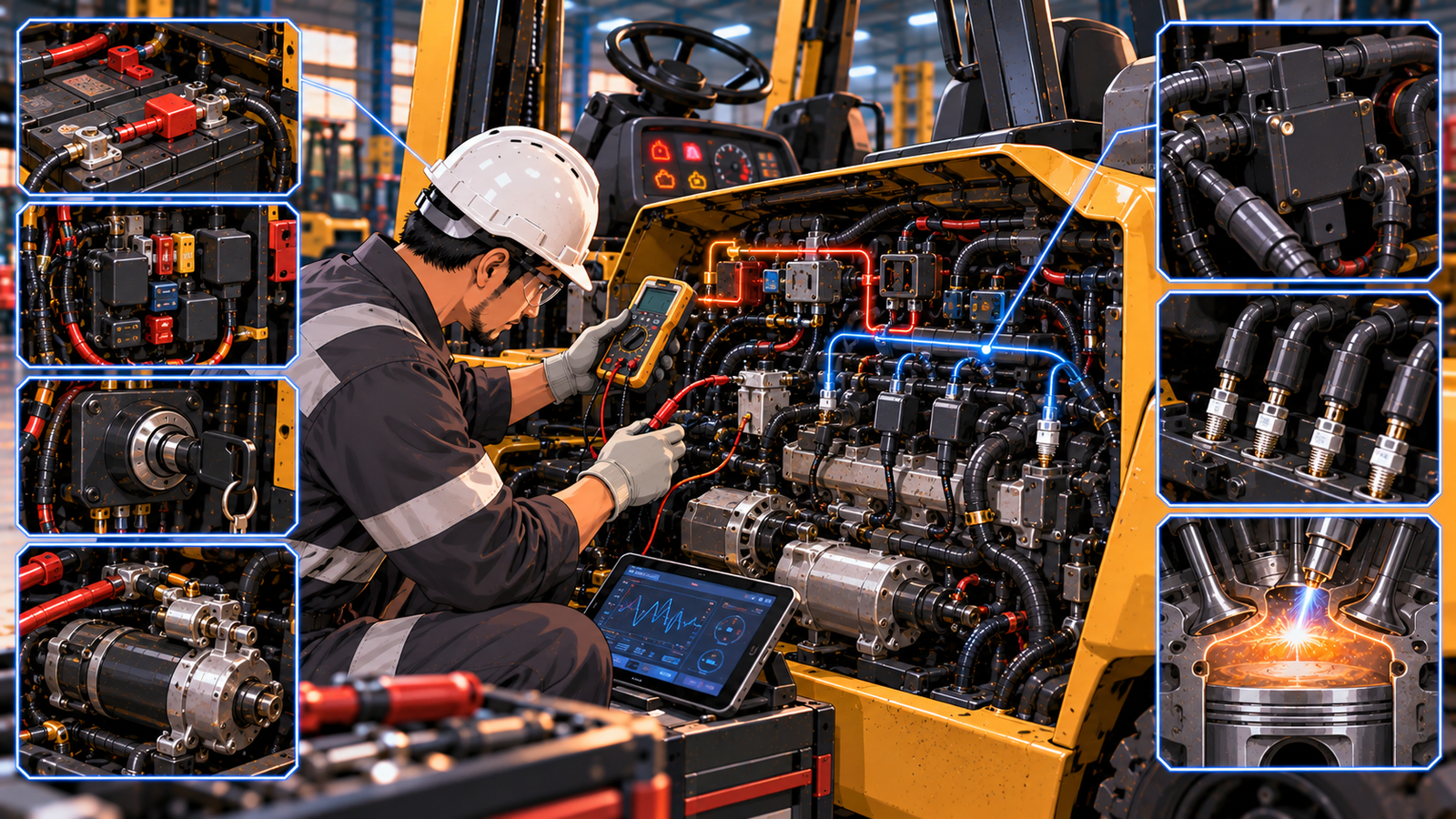
Electrical faults can prevent an otherwise mechanically healthy forklift from starting.
Possible problem areas include:
- Ignition switch
- Fuses
- Relays
- Wiring
- Connectors
- Ground connections
- Sensors
- Control modules
- Safety circuits
For suitable forklift models, diagnostic equipment may also be required to identify electronic faults or stored fault codes.
Diesel forklift
- Intermittent starting
- Warning lights
- Multiple electrical functions not working
- Blown fuses
- Fault codes
- Starting failure after vibration or movement
- Electrical components operating inconsistently
10/
Forklift Safety Interlock Problems
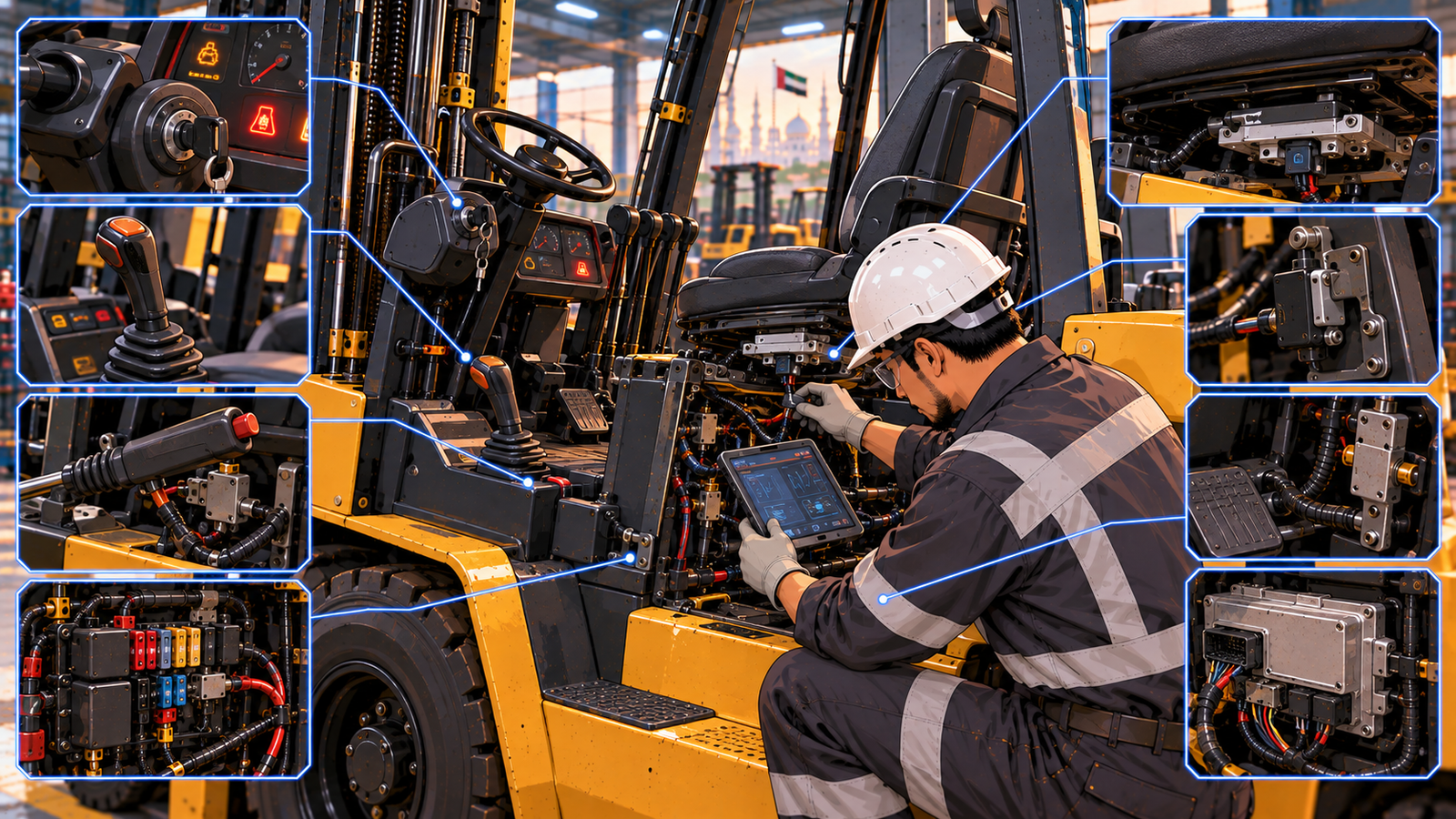
Modern forklift may include safety systems designed to prevent operation when certain conditions are not satisfied.
Depending on the model, these may involve:
- Operator presence systems
- Seat switches
- Parking-brake conditions
- Direction controls
- Neutral/start conditions
- Emergency-stop circuits
- Other machine-specific interlocks
If an interlock is preventing the machine from starting, bypassing the safety system is not an appropriate repair method.
The system should be diagnosed and repaired according to the manufacturer’s procedures.
11/
Forklift Starts but Immediately Stops
A forklift that starts and then shuts down requires a different diagnostic approach from a forklift that never cranks.
Possible causes include:
- Fuel delivery interruption
- The engine may receive enough fuel to start but insufficient fuel to continue operating.
- Electrical supply interruption
- A loose connection, ignition circuit problem, relay fault, or control-system issue may interrupt power.
- Sensor or control problem
- Some modern forklifts use electronic controls and sensors that can influence engine operation.
- Safety system
- A machine-specific safety or control condition may cause the system to shut down.
12/
Electric Forklift Won’t Start
Electric forklift require a different troubleshooting process because they do not use an internal-combustion engine.
Possible causes include:
- Low battery charge
- Battery condition
- Battery connector problem
- Charging-system issue
- Emergency-stop activation
- Safety interlock
- Controller fault
- Drive-system fault
- Electrical wiring problem
- Fault code
First checks
- Depending on the forklift design:
- Check battery status.
- Check whether the battery is properly connected.
- Check the emergency-stop condition.
- Check the display for warning messages.
- Check for fault codes.
- Check applicable safety interlocks.
- Follow the manufacturer’s diagnostic procedure.
Do not bypass safety circuits simply to make the forklift operate.
13/
Common Forklift Starting Problems & Possible Causes
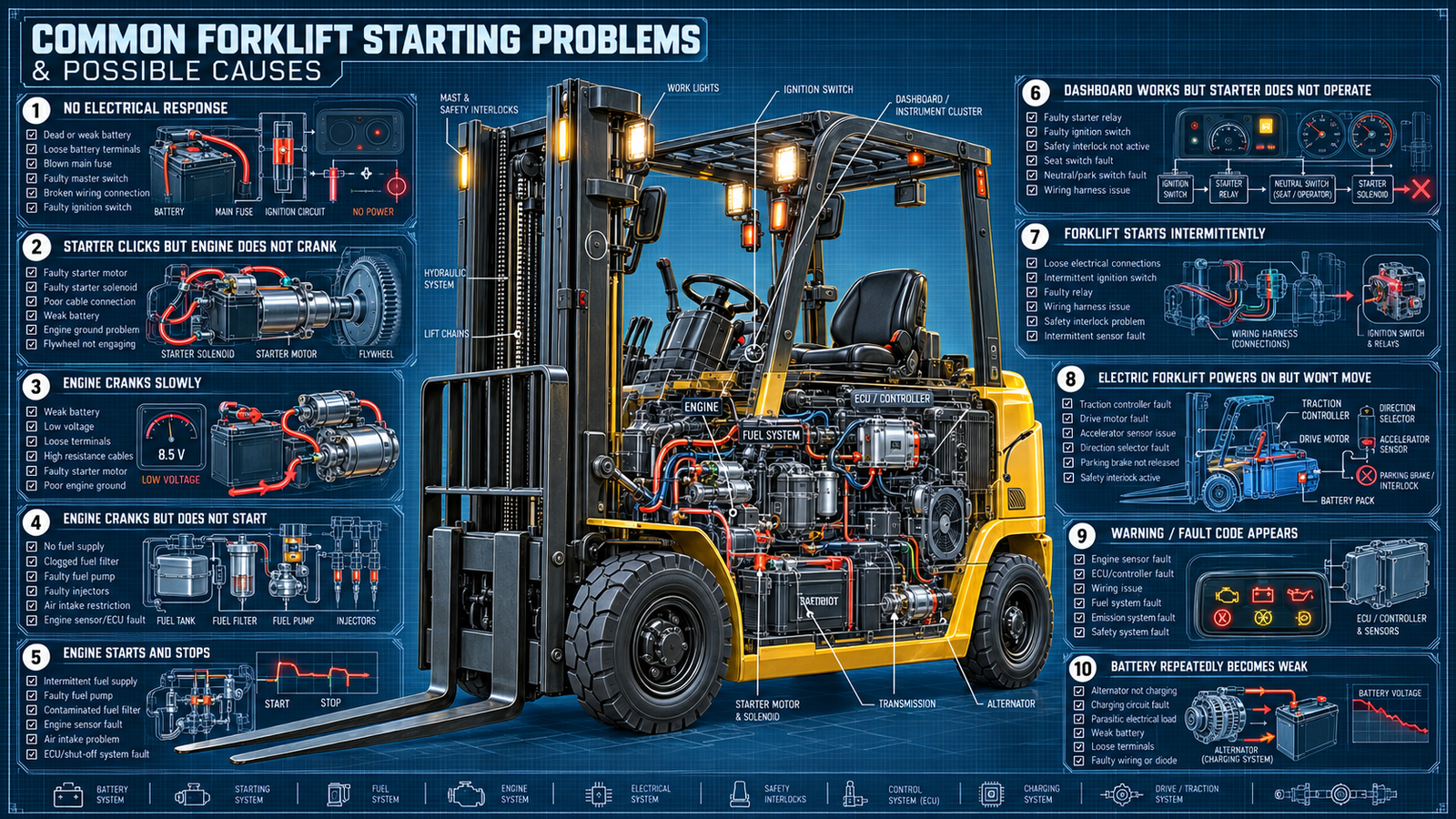
| Symptom | Possible Causes |
|---|---|
| No electrical response | Battery, main connection, fuse, ignition switch, wiring |
| Starter clicks but engine does not crank | Battery, terminals, solenoid, starter motor |
| Engine cranks slowly | Weak battery, cables, connections, starter motor |
| Engine cranks but does not start | Fuel, air intake, ignition/control system, injection system |
| Engine starts and stops | Fuel delivery, electrical supply, safety/control system |
| Dashboard works but starter does not operate | Interlock, relay, switch, starter circuit |
| Forklift starts intermittently | Battery connection, wiring, relay, switch, sensor |
| Electric forklift powers on but won’t move | Safety interlock, controller, drive system, fault code |
| Warning/fault code appears | Sensor, controller, electrical or system-specific fault |
| Battery repeatedly becomes weak | Battery condition, charging system, electrical load |
These are possible diagnostic areas, not definitive diagnoses. The actual cause depends on the forklift model and test results.
14/
A Practical Forklift Troubleshooting Sequence
A structured diagnostic process can prevent unnecessary parts replacement.
- Step 1 — Confirm the complaint
Ask:
- What exactly happens when starting?
- Did the problem appear suddenly?
- Was the forklift operating normally before the failure?
- Does the starter crank?
- Are warning lights visible?
- Are any fault codes displayed?
- Step 2 — Check the basic power supply
Inspect:
- Battery condition
- Battery terminals
- Main cables
- Ground connections
- Fuses
- Step 3 — Check the starting circuit
If the engine does not crank:
- Starter circuit
- Starter relay
- Solenoid
- Start switch
- Interlock system
- Starter motor
- Step 4 — If the engine cranks, investigate fuel and air
Check:
- Fuel supply
- Fuel filter
- Fuel lines
- Air filter
- Intake system
Further fuel-system or injection-system testing may be required depending on the machine.
- Step 5 — Check electrical and electronic systems
Where applicable:
- Wiring
- Sensors
- Relays
- Control modules
- Diagnostic codes
- Electrical supply
- Step 6 — Test rather than guess
At this stage, appropriate diagnostic equipment may be used to establish:
- Voltage
- Voltage drop
- Continuity
- Electrical supply
- Starting-system performance
- Hydraulic/electronic system conditions where relevant
- Step 7 — Identify the root cause
The goal is to establish:
- What failed?
- and also:
- Why did it fail?
This distinction is important when dealing with recurring forklift problems.
- Step 8 — Repair and verify
After repair:
- Start the machine
- Confirm normal operation
- Check for abnormal noise
- Check for warning indicators
- Verify relevant functions
- Inspect for leaks or other abnormalities
The repair should be verified before returning the forklift to normal service.
15/
Why Replacing Parts Without Diagnosis Can Be a Problem
Suppose a forklift does not start and the starter motor is replaced.
If the actual problem was a weak battery, damaged cable, faulty relay, or safety interlock, replacing the starter will not solve the underlying problem.
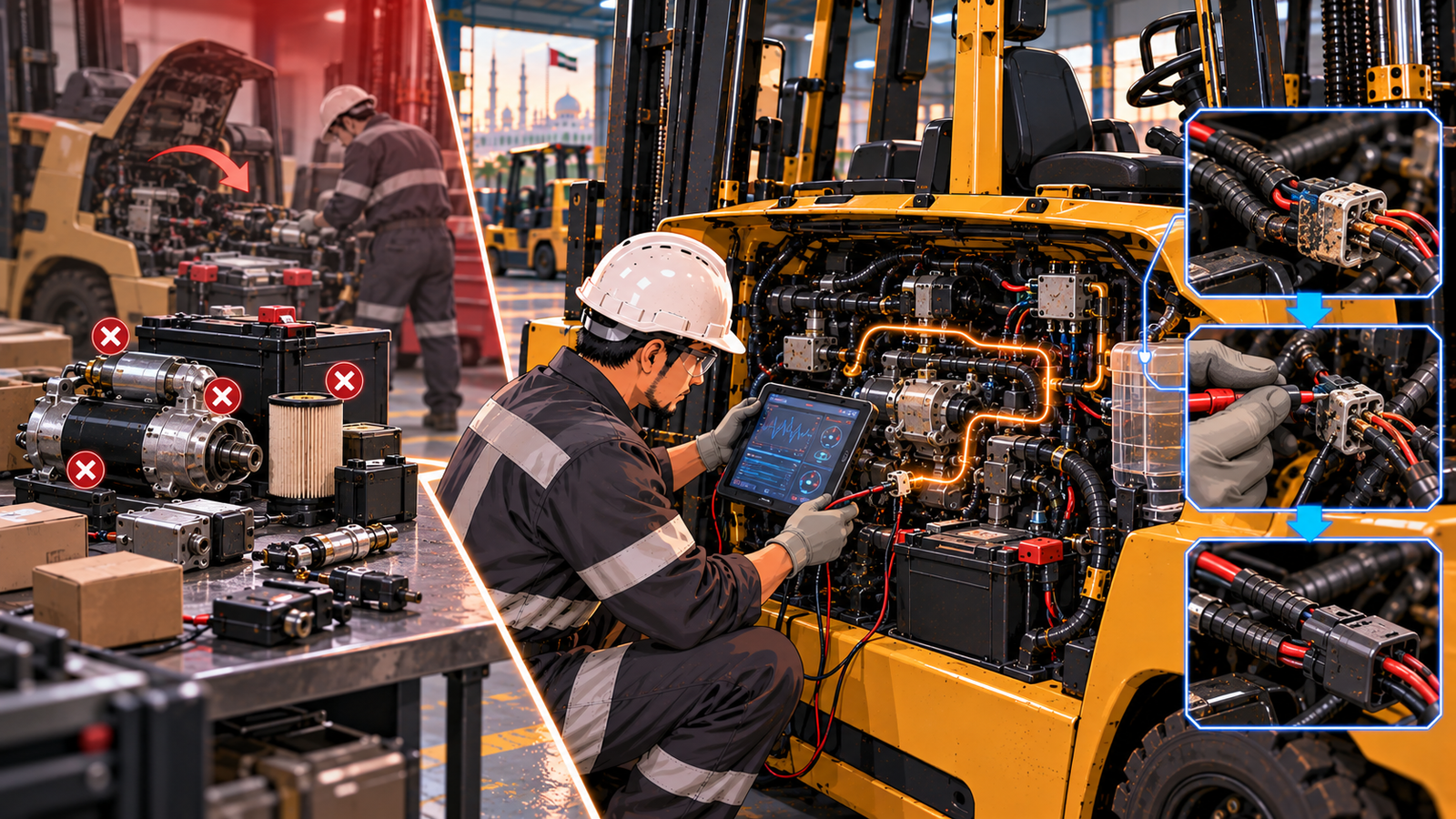
The same principle applies to:
- Batteries
- Alternators/charging components
- Fuel pumps
- Injectors
- Sensors
- Controllers
- Starter motors
A component should be replaced based on appropriate inspection and testing rather than the symptom alone.
This is particularly important when a machine experiences repeated starting failures.
16/
Preventive Maintenance to Reduce Starting Problems
Many starting problems can be associated with neglected maintenance or deteriorating components.
A preventive maintenance program should consider the manufacturer’s service requirements and the forklift‘s operating environment.
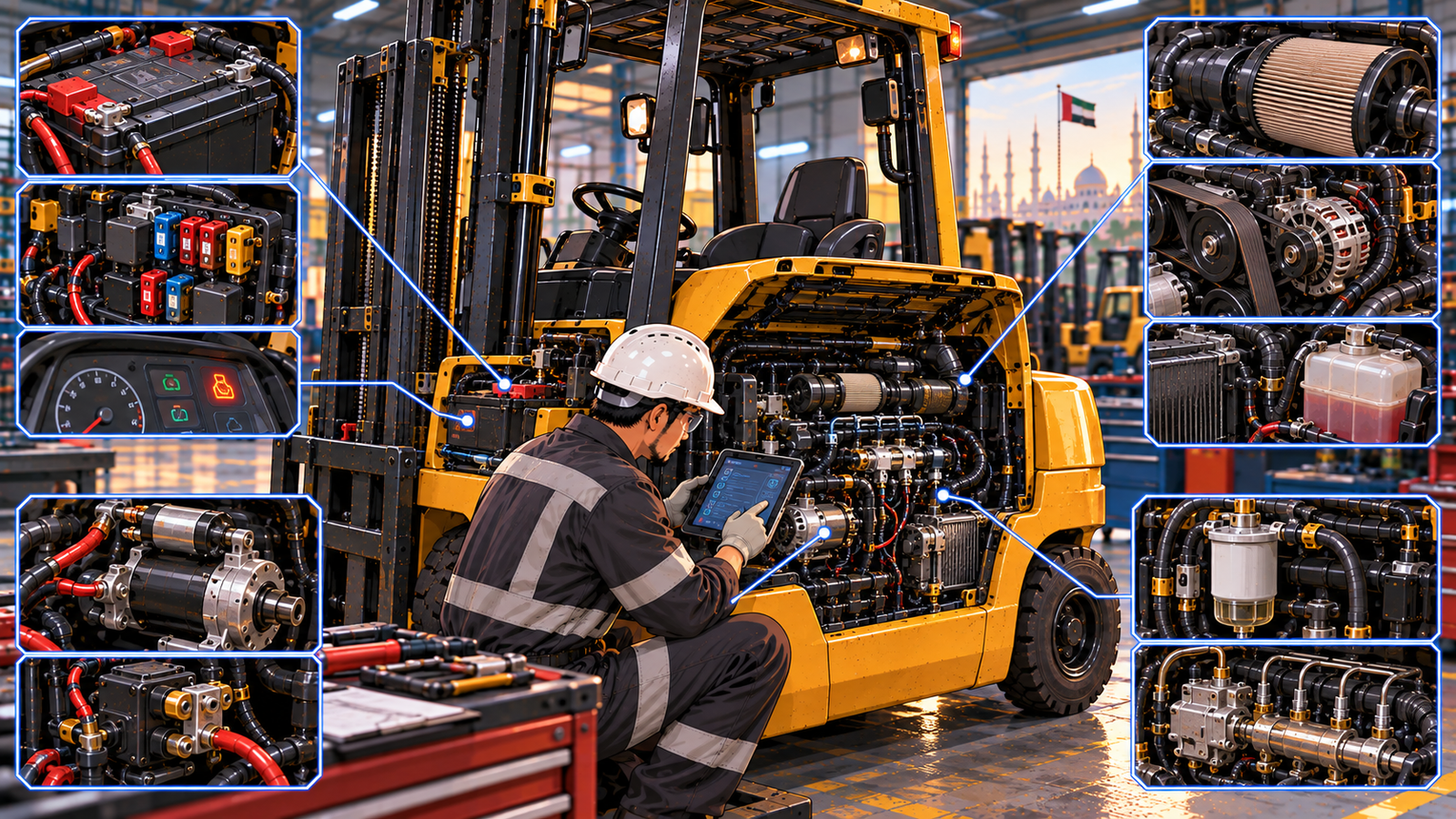
Battery and electrical system
- Check:
- Battery condition
- Terminals
- Cables
- Ground connections
- Charging system
- Electrical connections
Engine system
- For internal-combustion forklifts:
- Engine oil
- Oil filter
- Fuel filter
- Air filter
- Cooling system
- Belts
- Hoses
Starting system
- Inspect:
- Starter motor
- Solenoid
- Relay
- Wiring
- Start switch
- Relevant safety circuits
Fuel system
- Check:
- Fuel quality
- Fuel lines
- Filters
- Connections
- Fuel-system components
17/
Forklift Maintenance in Abu Dhabi Operating Conditions
Forklift operating in Abu Dhabi and other UAE industrial environments may encounter demanding conditions such as high ambient temperatures, dust, extended operating periods, and intensive material-handling workloads.
These conditions make routine inspection and maintenance particularly important.
Areas worth monitoring include:
Cooling System
- Radiator condition
- Coolant
- Hoses
- Fan
- Belts
- Airflow
Filtration
Check air and fuel filters according to the manufacturer’s maintenance schedule and operating conditions.
Battery and Electrical Connections
Heat, dust, vibration, and extended operating hours can make regular electrical inspection important.
General Machine Condition
Look for:
- Fluid leaks
- Damaged hoses
- Loose connections
- Worn components
- Unusual noise
- Abnormal operating temperatures
Maintenance intervals should ultimately be determined according to the forklift manufacturer’s specifications and actual operating conditions.
18/
When Should You Call a Forklift Maintenance Professional?
Professional troubleshooting should be considered when:
- The forklift repeatedly fails to start
- The starter does not operate
- The engine cranks but does not fire
- The machine starts and repeatedly stops
- Fault codes appear
- Electrical faults cannot be isolated
- Battery problems continue after charging
- The forklift overheats
- Fuel-system problems are suspected
- The same component repeatedly fails
- The machine requires specialist diagnostic equipment
A professional inspection can help determine whether the problem is electrical, mechanical, fuel-related, electronic, or associated with another machine system.
17/
Forklift Repair & Troubleshooting in Abu Dhabi

A forklift starting problem can originate from a relatively simple electrical connection or from a more complex mechanical, fuel, hydraulic, or electronic system.
At Al Baraka Machinery Maintenance L.L.C, our maintenance and repair approach focuses on systematic inspection and troubleshooting rather than replacing components without establishing the cause.
Our support areas include:
- Forklift maintenance
- Forklift troubleshooting
- Forklift breakdown support
- Electrical troubleshooting
- Battery and starting-system inspection
- Mechanical maintenance
- Hydraulic system inspection
- Engine-related maintenance
- Preventive maintenance
- General heavy machinery maintenance
- For equipment operating in demanding industrial environments, identifying the root cause of a recurring problem is an important part of reliable maintenance.
Need assistance with a Forklift starting problem or maintenance requirement in Abu Dhabi?
18/
Final thoughts
- A Forklift that won’t start can have many possible causes, and the correct diagnosis depends heavily on what happens when the starting control is activated.
- A no-response condition, slow cranking, cranking without starting, starting and immediately stopping, and an electric forklift that powers on but will not operate are different diagnostic situations.
- The most effective troubleshooting process is systematic:
- Confirm the symptom → Check basic power → Inspect starting circuit → Check fuel and air → Test electrical systems → Identify root cause → Repair → Verify operation
- Preventive maintenance also plays an important role in reducing avoidable starting problems. Regular inspection of batteries, electrical connections, filters, fuel systems, starting components, cooling systems, and other critical components can help identify developing problems before they result in unexpected downtime.
- When a Forklift develops a persistent or unexplained starting problem, proper diagnosis is more useful than simply replacing parts based on symptoms.
18/
Frequently Asked Questions
Why won’t my forklift start?
A forklift may not start because of a weak battery, poor electrical connection, starter-system fault, fuel problem, restricted air intake, safety interlock, wiring fault, sensor issue, or another mechanical/electronic problem. The exact cause depends on the observed starting symptom.
Why does my forklift click but not start?
A clicking sound with no engine cranking can be associated with a weak battery, poor battery connection, starter solenoid, starter motor, cable, or starting-circuit problem. Testing is required to identify the actual cause.
Why does my forklift crank but not start?
If the starter turns the engine but it does not fire, possible areas include fuel delivery, fuel filtration, air intake, injection or ignition systems, electrical controls, and sensors, depending on the forklift type.
Why does my forklift start and then stop?
Possible causes include fuel-delivery interruption, electrical supply problems, safety-system conditions, sensors, or control-system faults. The time between starting and stopping can provide useful diagnostic information.
Can a weak forklift battery prevent the forklift from starting?
Yes. A battery with insufficient charge or poor electrical connections may not provide adequate power for the starting system.
How do I know if my forklift starter motor is faulty?
Possible signs include no starter response, clicking without cranking, or slow cranking despite adequate battery power. Battery condition, cables, connections, solenoid, and the starting circuit should also be checked before condemning the starter motor.
Why won’t my electric forklift move even though it powers on?
Possible causes include a safety interlock, emergency-stop condition, battery-related issue, controller fault, drive-system problem, or displayed fault code. The machine’s specific diagnostic procedure should be followed.
Should I replace the battery if my forklift won’t start?
Not necessarily. A starting failure can result from battery condition, connections, charging-system problems, starter components, wiring, or other faults. The battery and starting circuit should be tested before replacement.
How can preventive maintenance reduce forklift starting problems?
Regular inspection and servicing of the battery, electrical connections, filters, fuel system, starter circuit, cooling system, and other components can help identify deteriorating conditions before they result in an unexpected starting failure.
When should I contact a forklift repair company?
Professional assistance is appropriate when the forklift repeatedly fails to start, fault codes appear, electrical or fuel-system problems cannot be isolated, or specialist diagnostic equipment is required.