
Forklift Maintenance in Abu Dhabi: Complete Maintenance & Troubleshooting Guide
Forklifts are essential material-handling machines across warehouses, construction sites, industrial facilities, workshops, logistics operations, ports, and oilfield-related environments. Because forklifts frequently operate under repetitive loads and demanding working conditions, regular maintenance is essential for safe and reliable operation.
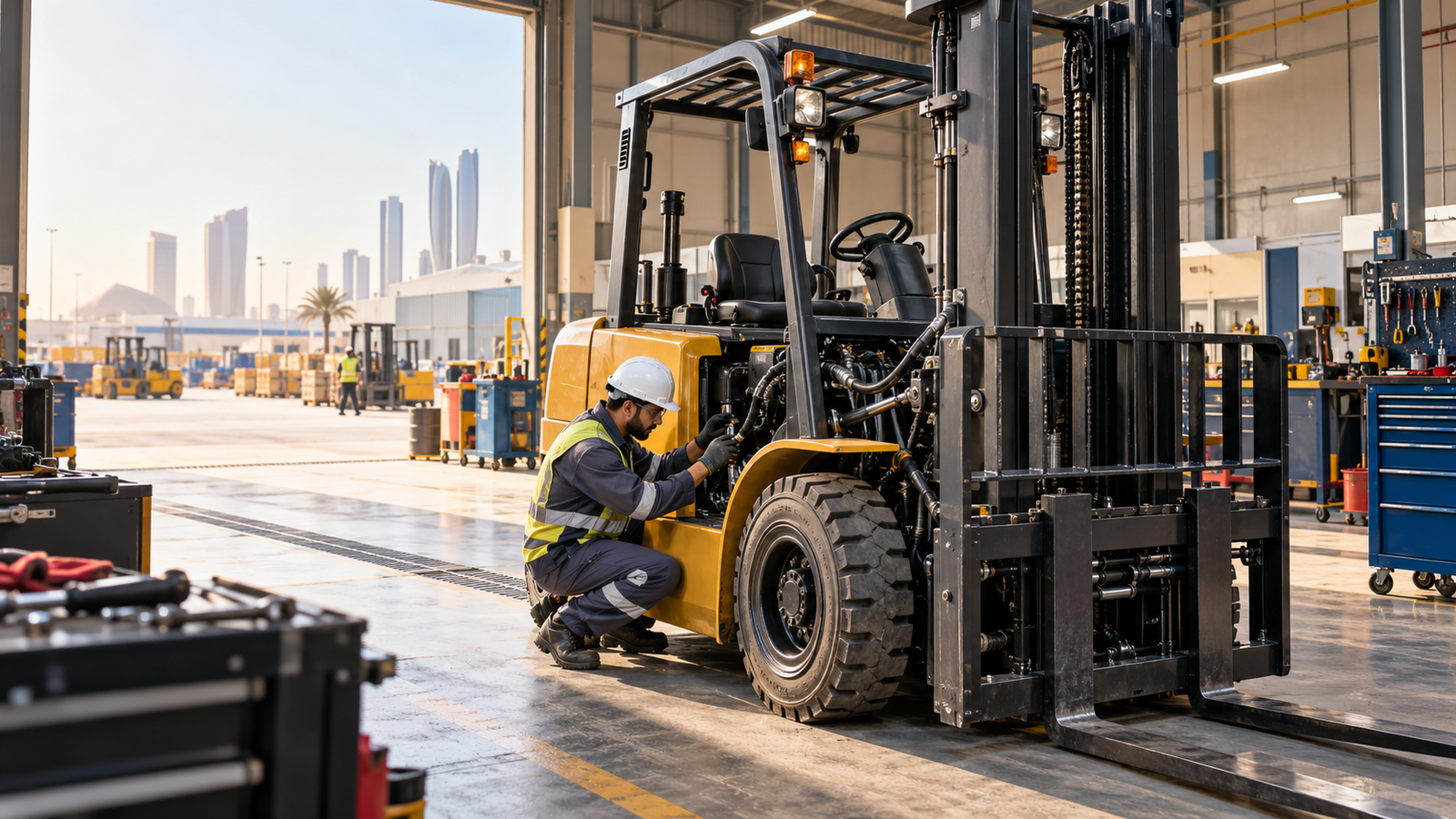
- A forklifts that appears to be working normally can still develop problems within its hydraulic, electrical, mechanical, braking, steering, transmission, or engine systems.
- Small warning signs such as slow lifting, unusual hydraulic noise, steering difficulty, brake performance changes, hydraulic oil leakage, battery problems, or engine overheating should not be ignored. Minor faults can develop into larger component failures when the underlying cause is not identified and corrected.
- A structured forklift maintenance program combines routine inspections, preventive servicing, fluid and filter maintenance, hydraulic system checks, electrical inspections, mechanical inspections, and professional troubleshooting when abnormal symptoms appear.
- For forklifts operating in Abu Dhabi and across the UAE, maintenance planning should also account for factors such as high ambient temperatures, dust, demanding operating environments, and extended working hours.
- This guide explains the major areas of forklift maintenance, common problems, troubleshooting considerations, preventive maintenance practices, and situations where professional forklift repair may be required.
01/
Why Is Forklift Maintenance Important?
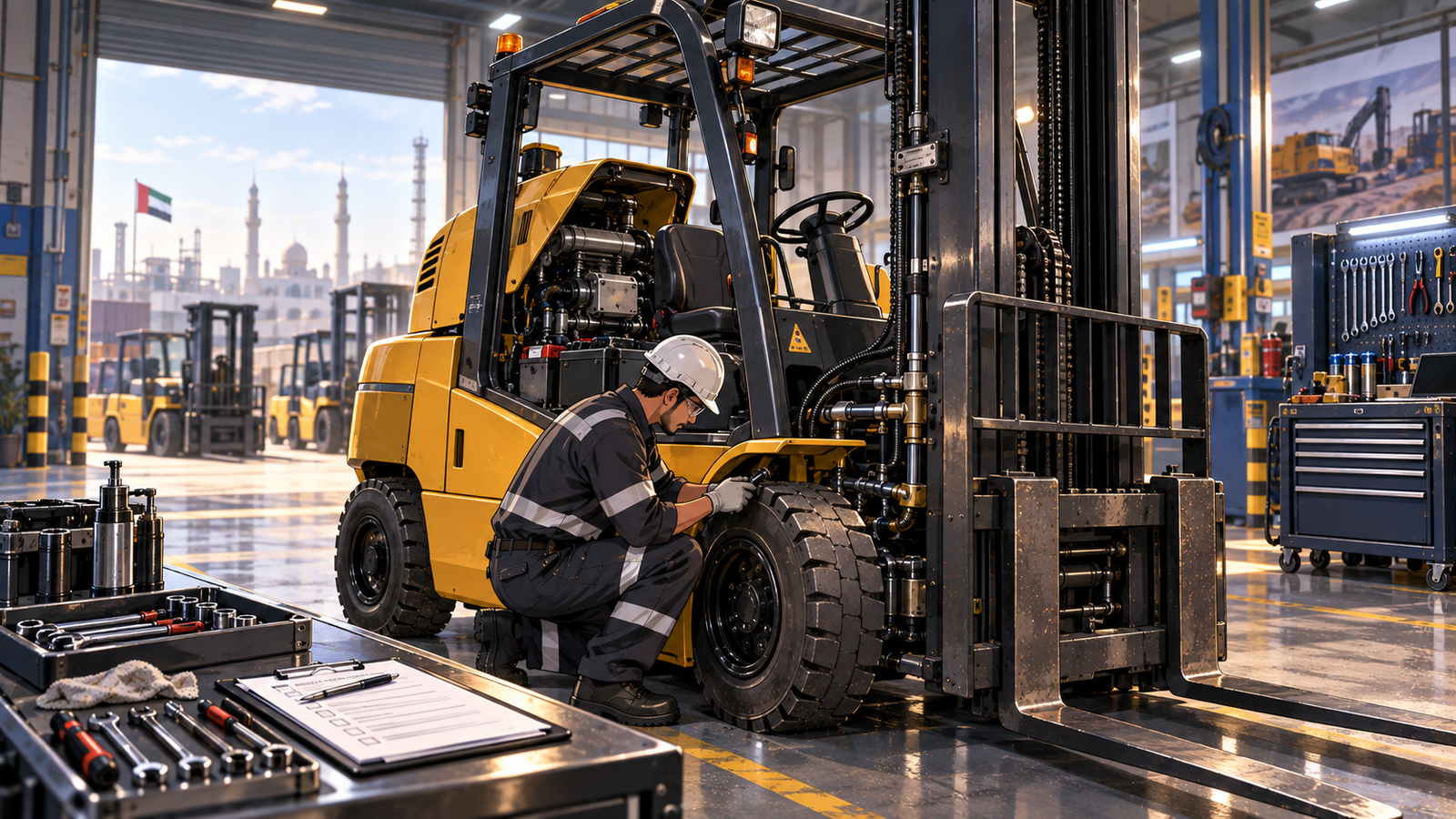
Forklift maintenance is not simply about keeping a machine operational. A properly maintained forklift can provide more consistent performance and help reduce unexpected downtime.
Regular maintenance helps address several important areas.
- Reducing Unexpected Breakdowns
A worn hose, contaminated hydraulic oil, weak battery connection, damaged belt, or deteriorating brake component can eventually cause an operational failure.
Routine inspections can identify these conditions before they become major breakdowns.
- Maintaining Lifting Performance
The hydraulic system is responsible for important functions such as:
- Fork lifting
- Fork lowering
- Mast movement
- Tilt functions
- Attachment operation
Hydraulic oil condition, pump performance, valves, cylinders, hoses, and filters all influence hydraulic performance.
- Improving Equipment Reliability
Forklifts often operate repeatedly throughout the working day. Consistent preventive maintenance helps keep major systems within their intended operating condition.
- Extending Component Life
Proper lubrication, correct fluid levels, clean filters, appropriate hydraulic oil, and timely replacement of worn components can help reduce unnecessary wear.
- Controlling Repair Costs
Preventive maintenance does not eliminate all failures, but identifying problems early can reduce the possibility of secondary damage.
For example, a small hydraulic leak may initially require a hose or seal repair. If ignored, continued oil loss and contamination can contribute to more extensive hydraulic problems.
02/
How Does a Forklift Work?
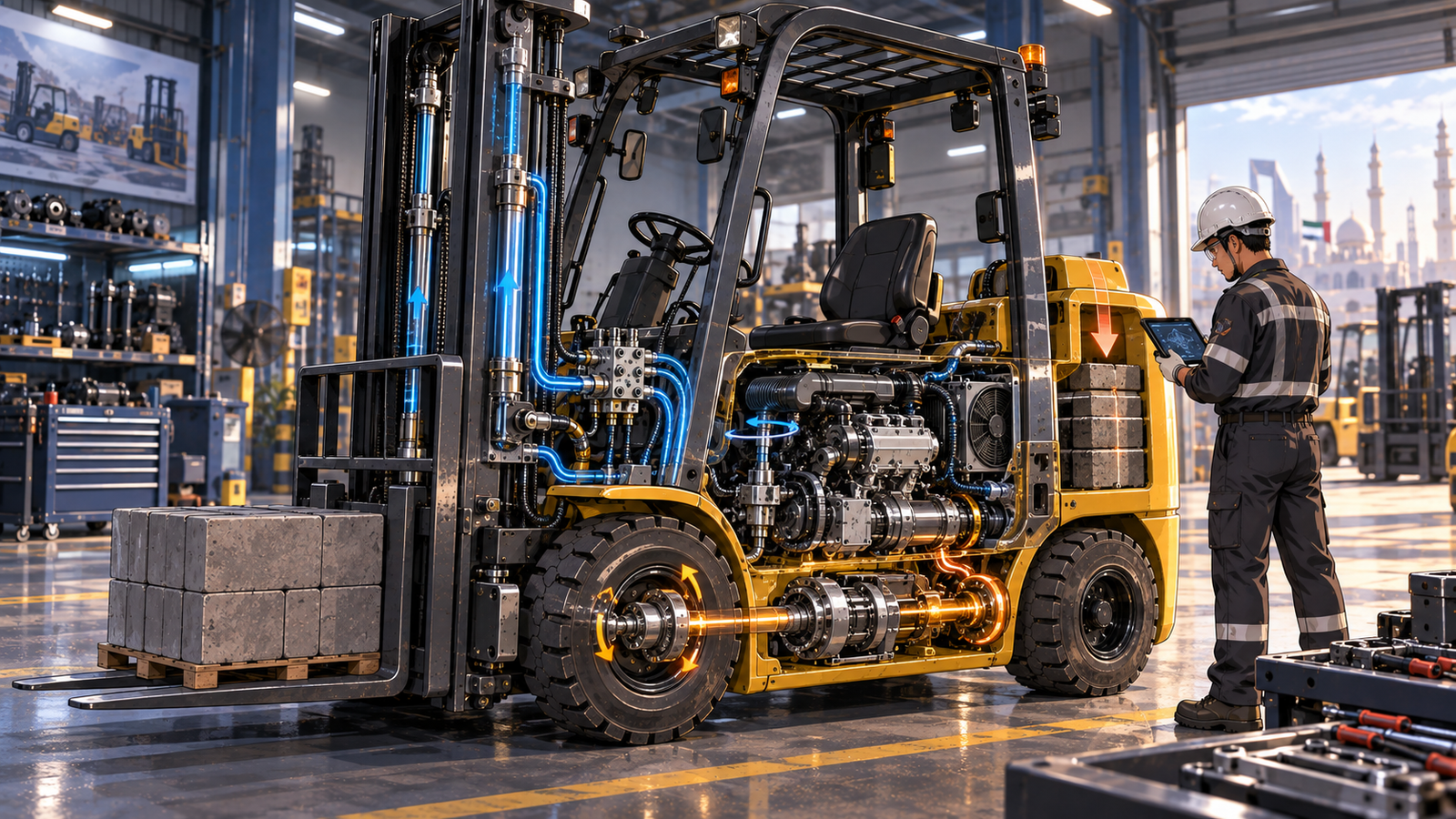
Understanding the major systems of a forklift makes troubleshooting easier.
Although forklift designs vary by manufacturer and model, most machines contain several major systems.
- Engine or Electric Drive System
Depending on the forklift type, the power source may be:
- Diesel engine
- LPG engine
- Petrol/gasoline engine
- Electric battery system
Internal-combustion forklifts require maintenance of the engine, cooling system, fuel system, lubrication system, and related components.
Electric forklifts require particular attention to the battery, charging system, electrical connections, motor, controller, and associated wiring.
- Hydraulic System
The hydraulic system controls functions such as:
- Lifting
- Lowering
- Mast tilting
- Attachment movement
Typical components include:
- Hydraulic pump
- Hydraulic reservoir
- Hydraulic oil
- Hydraulic filter
- Control valves
- Hydraulic cylinders
- Hoses
- Pipes
- Fittings
- Seals
A hydraulic fault can result in slow lifting, weak lifting force, abnormal noise, leakage, or inconsistent mast movement.
- Mast and Lifting Assembly
The mast is one of the most heavily used mechanical assemblies on a forklift.
Maintenance should consider:
- Mast rails
- Rollers
- Chains
- Chain anchors
- Cylinders
- Forks
- Mounting points
- Lubrication points
Wear or damage in the mast assembly can affect lifting performance and operating safety.
- Transmission and Drivetrain
Internal-combustion forklifts may use mechanical or hydrostatic drivetrain systems depending on design.
Maintenance can include inspection of:
- Transmission fluid
- Drive components
- Axles
- Differential components
- Drive shafts
- Mounting points
- Seals
Abnormal noise, poor acceleration, slipping, or difficulty moving can indicate a drivetrain-related problem.
- Steering System
The steering system requires regular inspection because forklifts operate in confined areas where precise maneuverability is important.
Possible areas of inspection include:
- Steering linkage
- Steering cylinder
- Hydraulic steering components
- Steering wheel/control
- Bushings
- Joints
- Tyres
Excessive steering play or unusual resistance should be investigated.
03/
Daily Forklift Inspection
A daily inspection should be performed before the forklift is placed into normal operation.
The exact inspection requirements depend on the machine, manufacturer, operating environment, and applicable workplace procedures.
A basic inspection can include the following.
Visual Inspection
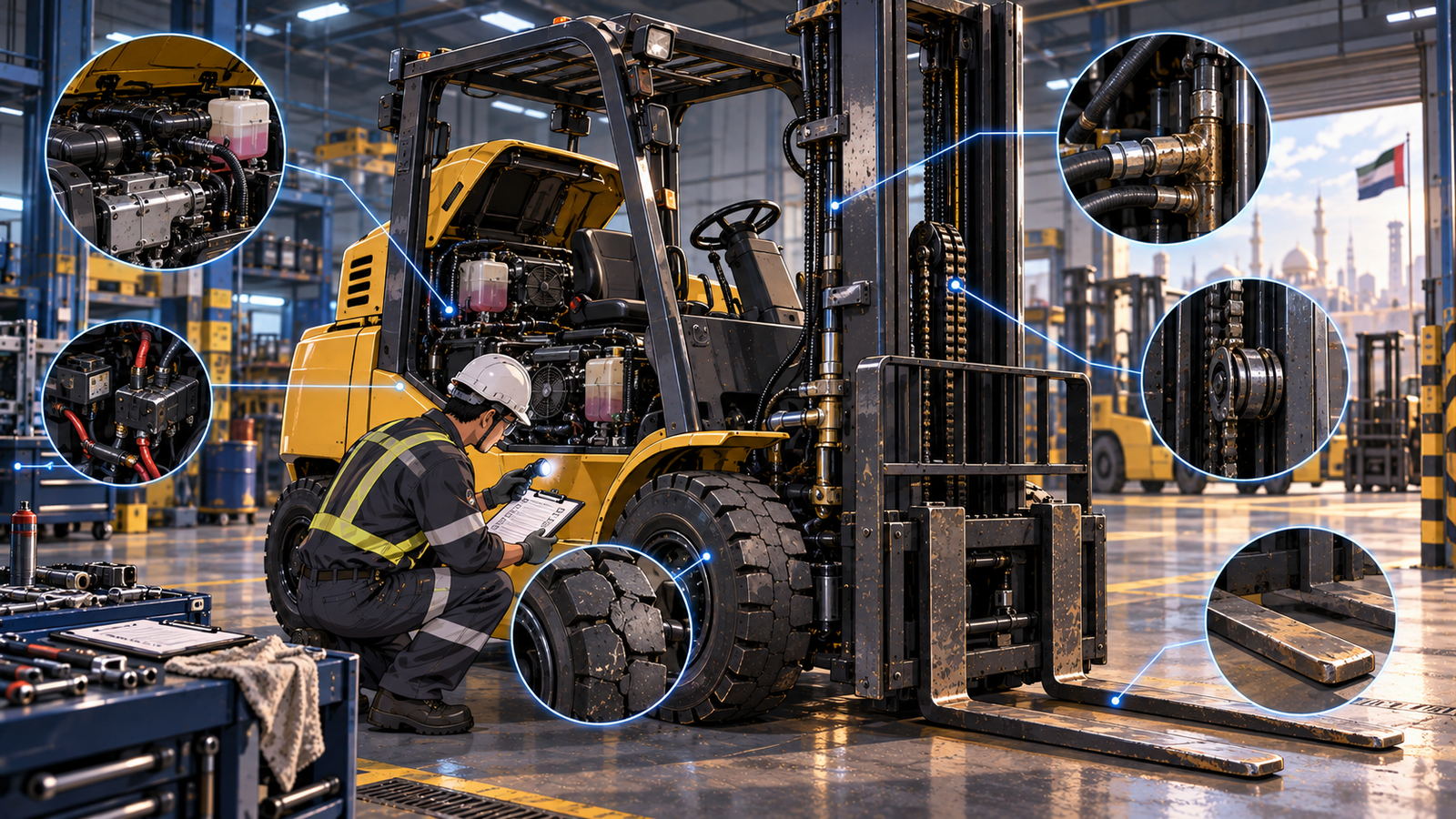
- Hydraulic oil leaks
- Engine oil leaks
- Coolant leaks
- Damaged hoses
- Loose fittings
- Damaged cables
- Visible structural damage
- Damaged forks
- Mast abnormalities
- Tyre damage
Fork and Mast Inspection
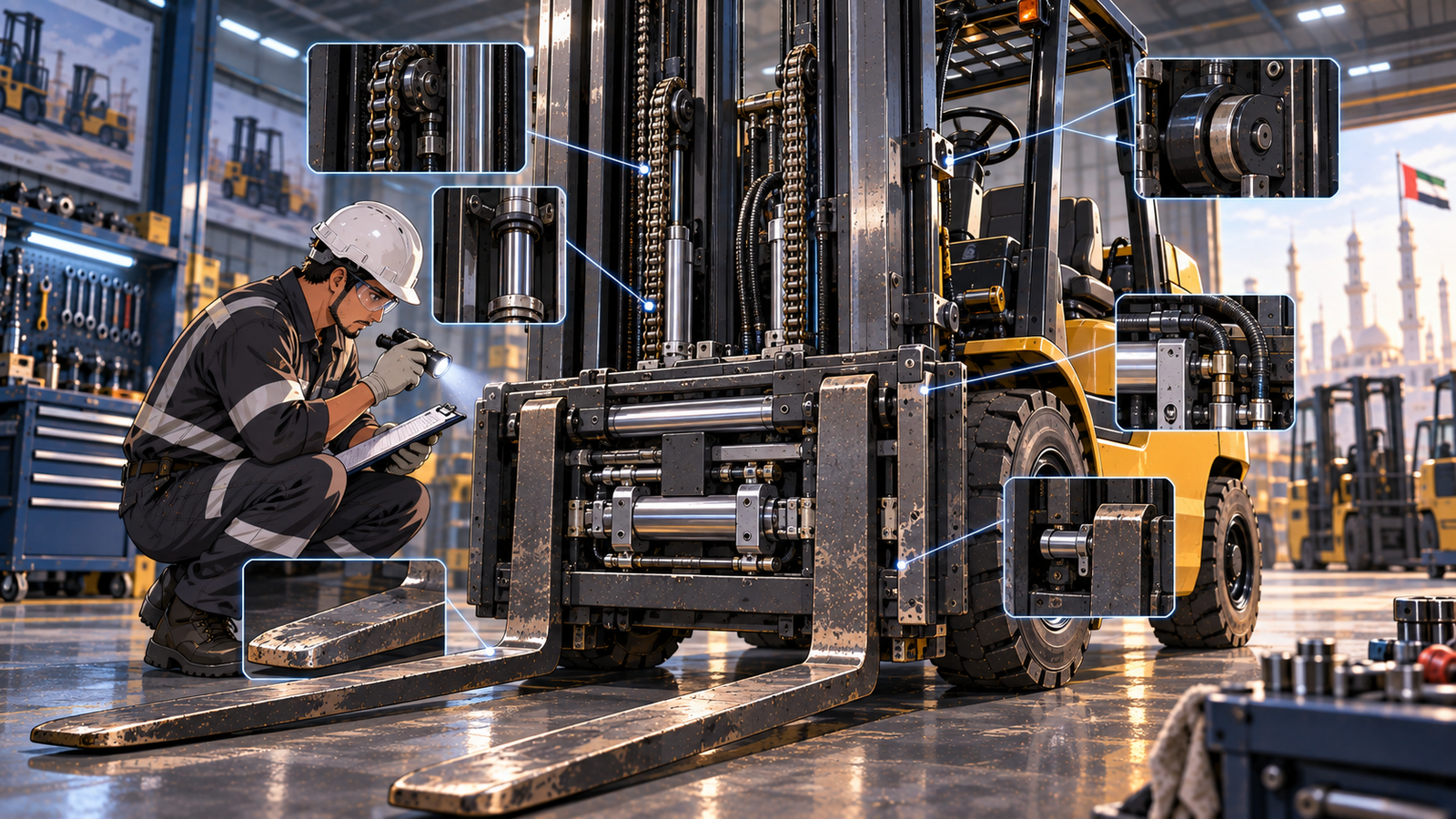
- Fork condition
- Fork locking mechanisms
- Mast rails
- Chains
- Rollers
- Hydraulic cylinders
- Attachments
Fluid Levels
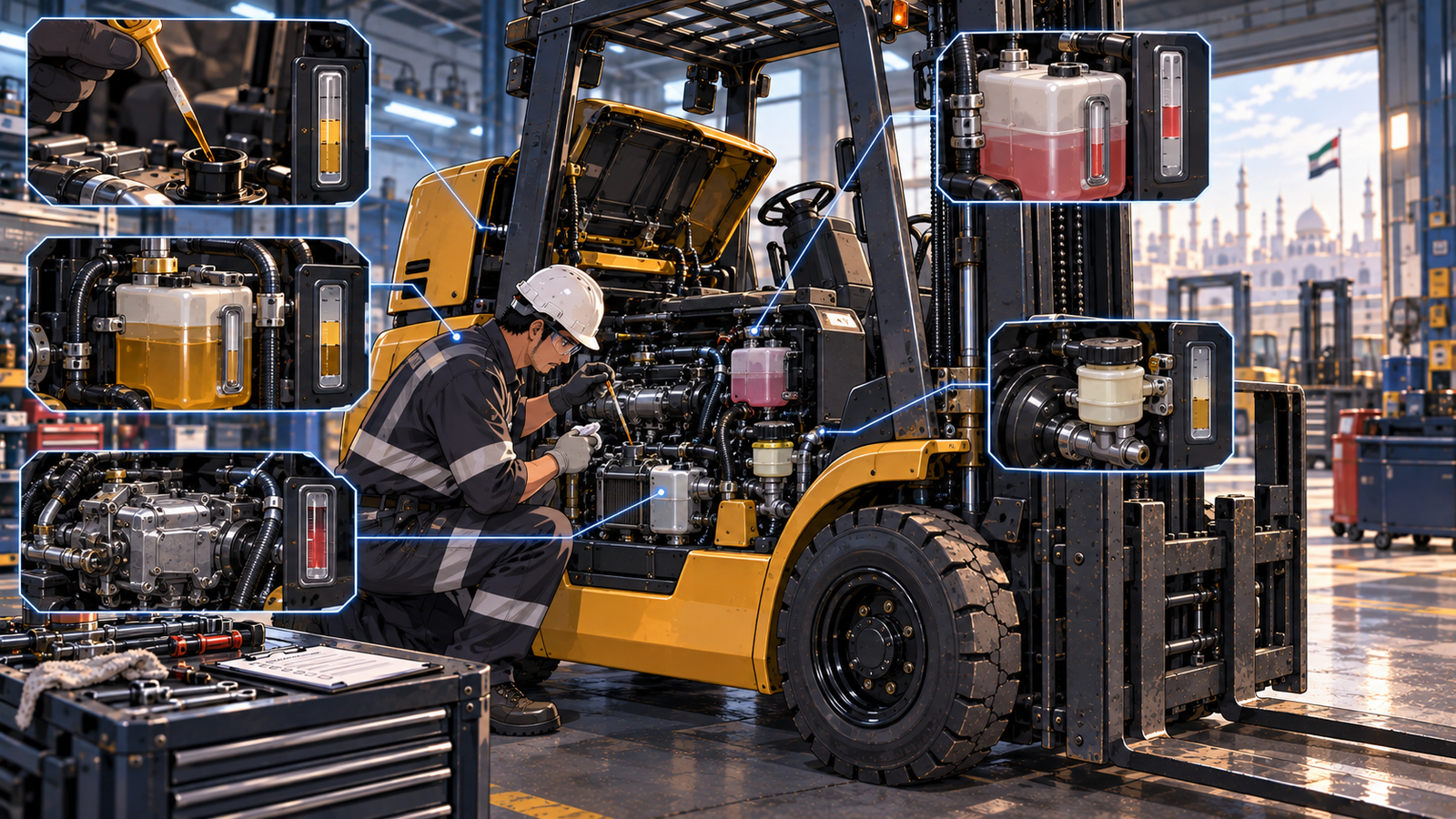
- Engine oil
- Hydraulic oil
- Coolant
- Transmission fluid
- Brake fluid or applicable system fluid
Electrical System
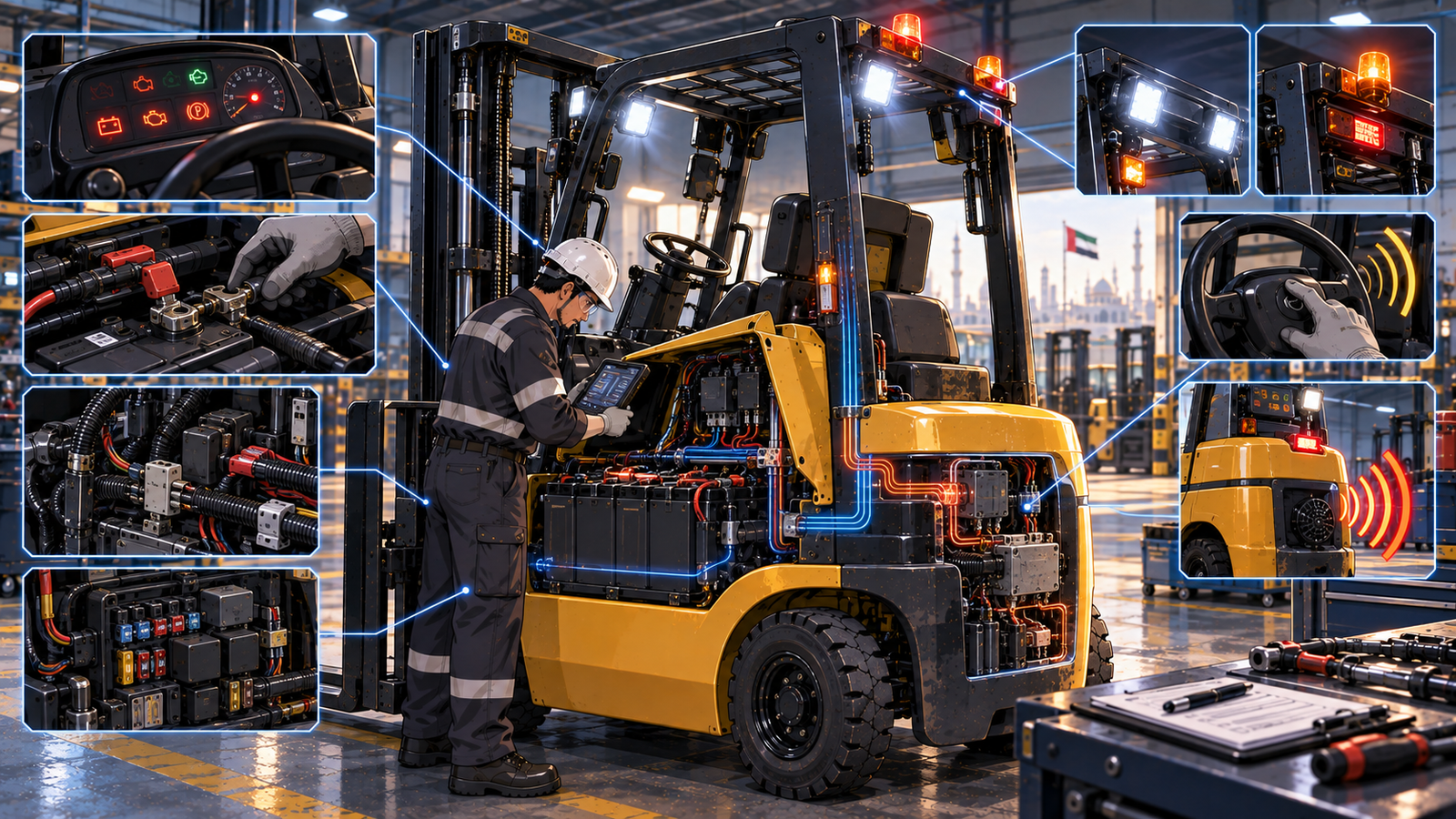
- Battery condition
- Battery terminals
- Electrical cables
- Warning lights
- Horn
- Work lights
- Reverse alarm
- Instrument panel
Operating Controls
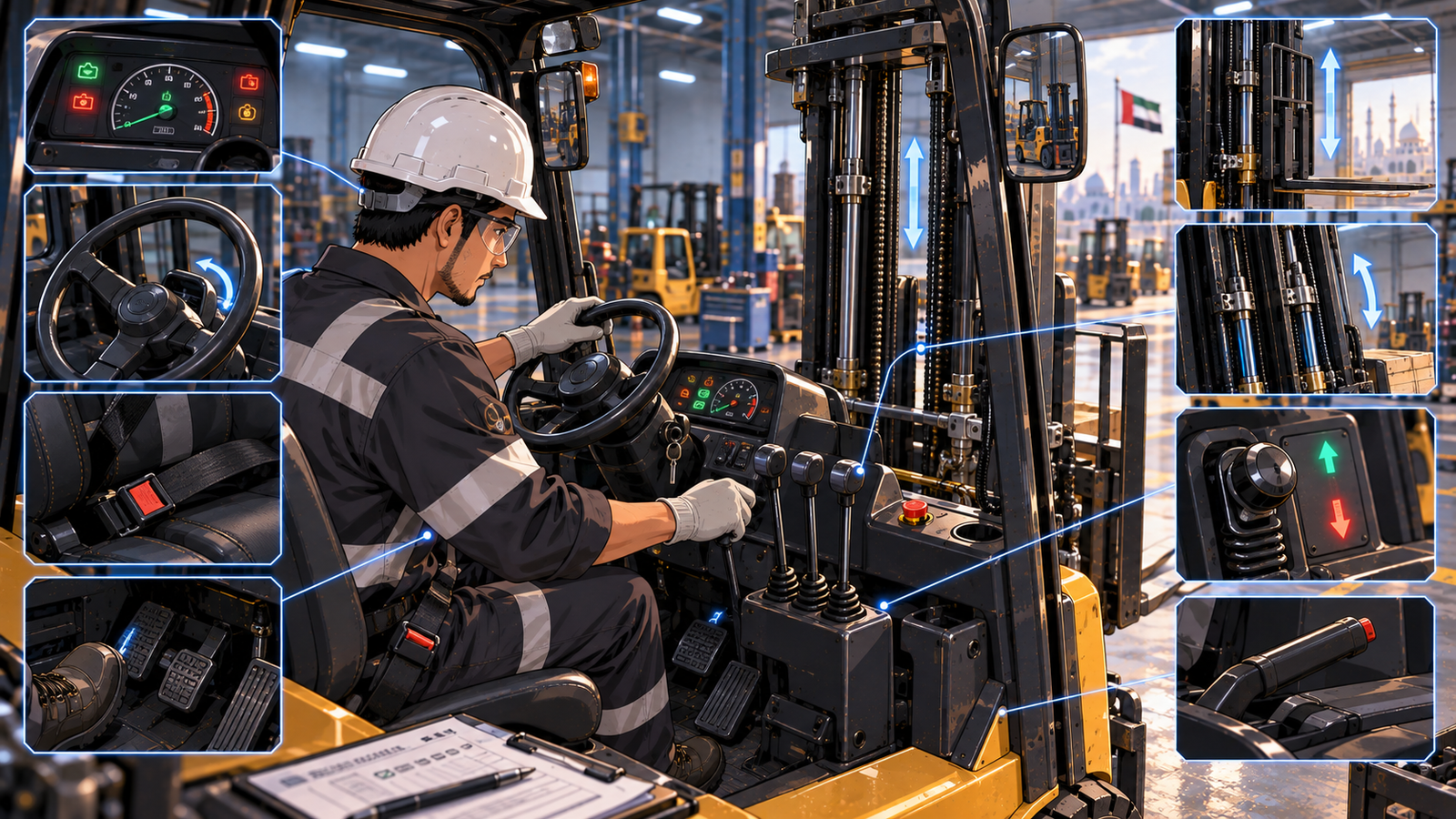
- Steering
- Brakes
- Parking brake
- Lift controls
- Tilt controls
- Direction control
- Accelerator
- Safety systems
Any abnormal condition should be investigated according to the manufacturer’s procedures and workplace safety requirements.
04/
Common Forklift Problems and Their Possible Causes
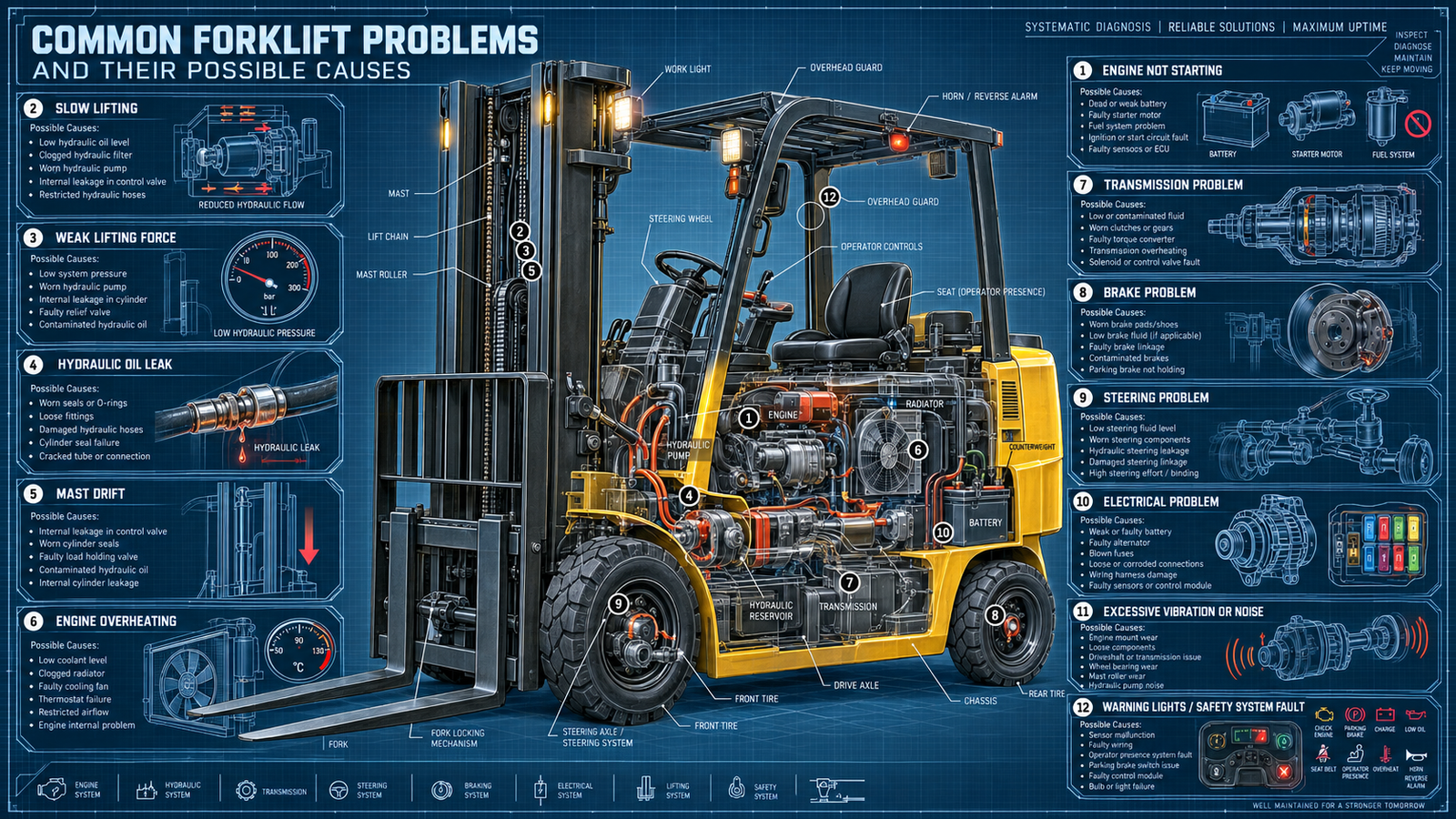
Forklift problems can originate from different systems, and the same symptom may have multiple possible causes.
For this reason, replacing a component based only on a symptom is not always an appropriate diagnostic approach.
| Symptom | Possible Areas to Investigate |
|---|---|
| Forks lift slowly | Low hydraulic oil, restricted filter, pump wear, valve issue, hydraulic leakage |
| Forks cannot lift properly | Hydraulic pressure problem, pump issue, valve problem, cylinder problem |
| Forks drift downward | Internal cylinder leakage, valve leakage, hydraulic circuit issue |
| Hydraulic oil leakage | Damaged hose, seal failure, loose fitting, cylinder leakage |
| Engine overheats | Cooling restriction, low coolant, radiator contamination, fan/belt issue |
| Forklift will not start | Battery, starter, fuel system, ignition/electrical fault, safety interlock |
| Weak engine performance | Fuel restriction, air filter restriction, injector/fuel issue, engine-related fault |
| Difficult steering | Hydraulic steering problem, linkage wear, tyre issue, steering cylinder problem |
| Poor braking | Worn components, adjustment issue, hydraulic/mechanical fault |
| Excessive vibration | Tyres, drivetrain, mounting, bearings, mechanical wear |
| Unusual hydraulic noise | Low oil, air entering system, pump problem, restriction |
| Battery drains quickly | Battery condition, charging system, electrical load, connection issue |
| Warning light appears | Sensor, electrical fault, system malfunction, controller/ECU issue |
These are diagnostic possibilities rather than definitive diagnoses. The actual cause should be established through appropriate inspection and testing.
05/
Forklift Hydraulic Problems
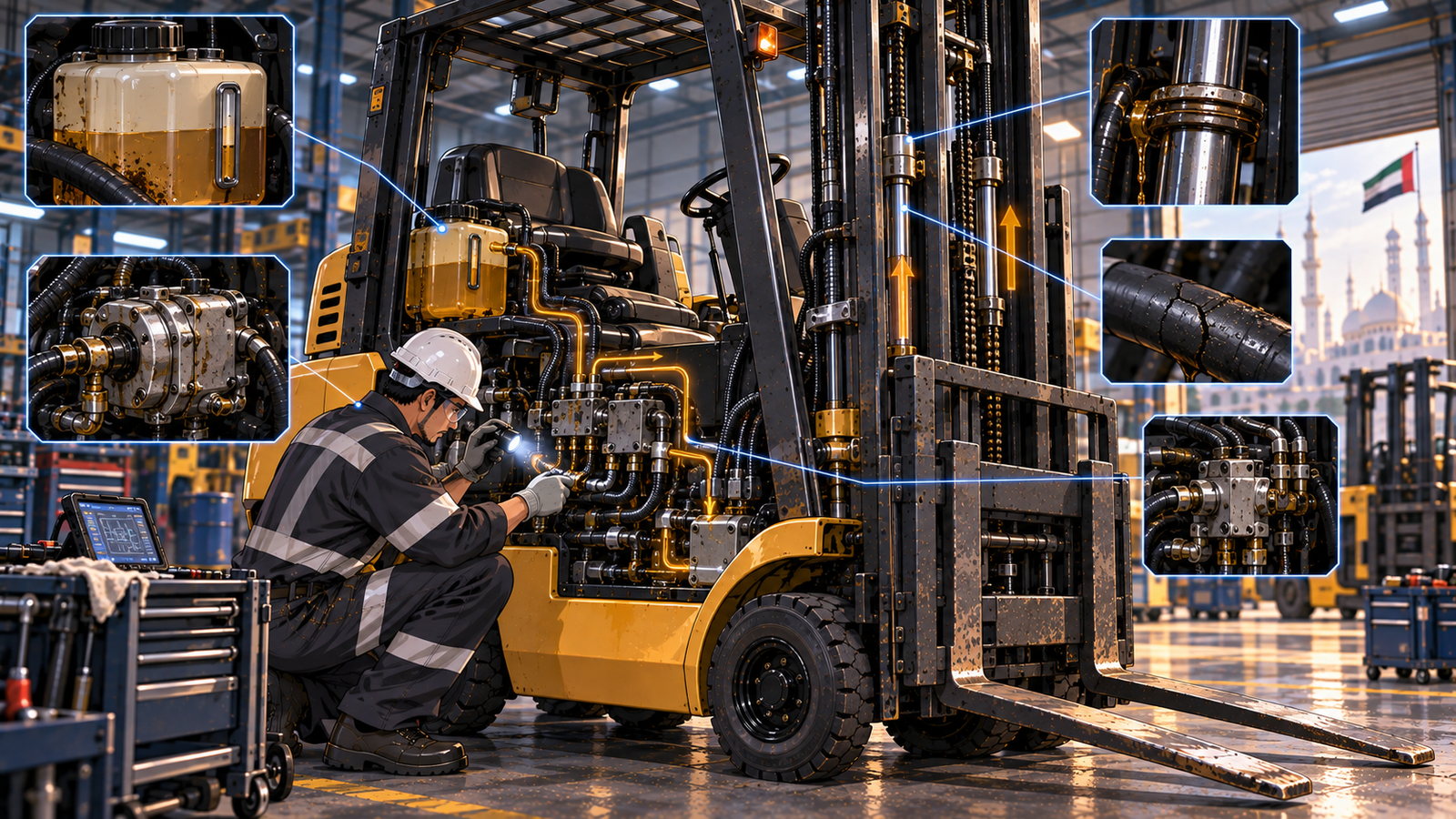
Hydraulic problems are among the most important areas to monitor because the hydraulic system performs the forklift’s lifting and mast-control functions.
Forklift Lifting Slowly
Slow lifting can result from several conditions.
Possible causes include:
- Low hydraulic oil level
- Contaminated hydraulic oil
- Restricted hydraulic filter
- Hydraulic pump wear
- Pressure relief valve problems
- Control valve issues
- Internal cylinder leakage
- Hydraulic hose restrictions
- Incorrect oil specification
The correct diagnostic approach should begin with basic checks before moving toward component-level testing.
Forklift Has Weak Lifting Power
If the forklift can lift but struggles under normal loads, hydraulic pressure and flow should be investigated.
Potential causes include:
- Hydraulic pump wear
- Incorrect system pressure
- Relief valve problems
- Internal leakage
- Cylinder problems
- Restricted filters
- Contaminated hydraulic oil
A pressure test using appropriate diagnostic equipment can help determine whether the hydraulic circuit is producing the required pressure.
Hydraulic Oil Leakage
Hydraulic leaks may occur around:
- Hoses
- Fittings
- Cylinders
- Pump connections
- Control valves
- Seals
- Reservoir connections
A leak should not simply be cleaned and ignored.
Loss of hydraulic oil can reduce system performance and may allow air or contaminants to enter the hydraulic circuit.
06/
Forklift Engine Problems
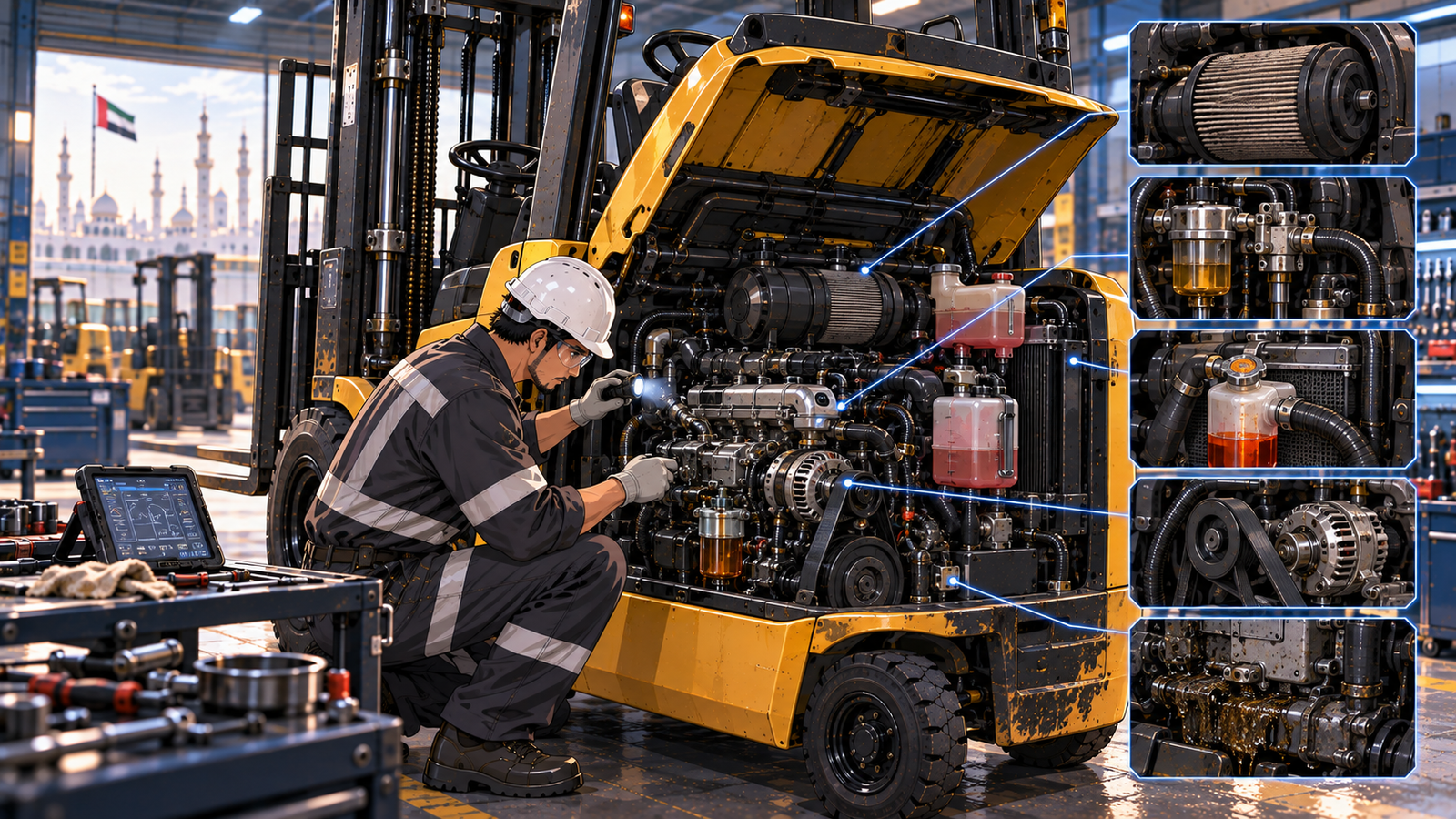
Internal-combustion forklifts require regular engine maintenance.
Common engine-related complaints include:
- Difficulty starting
- Hard starting
- Engine overheating
- Loss of power
- Rough running
- Excessive smoke
- Unusual engine noise
- Increased fuel consumption
Potential causes vary depending on the engine and fuel system.
Inspection may include:
- Engine oil condition
- Oil level
- Air filter
- Fuel filter
- Fuel supply
- Cooling system
- Radiator condition
- Belts
- Hoses
- Battery
- Charging system
- Sensors and electrical components
A persistent engine problem should be diagnosed systematically rather than replacing parts based solely on symptoms.
07/
Forklift Electrical Problems
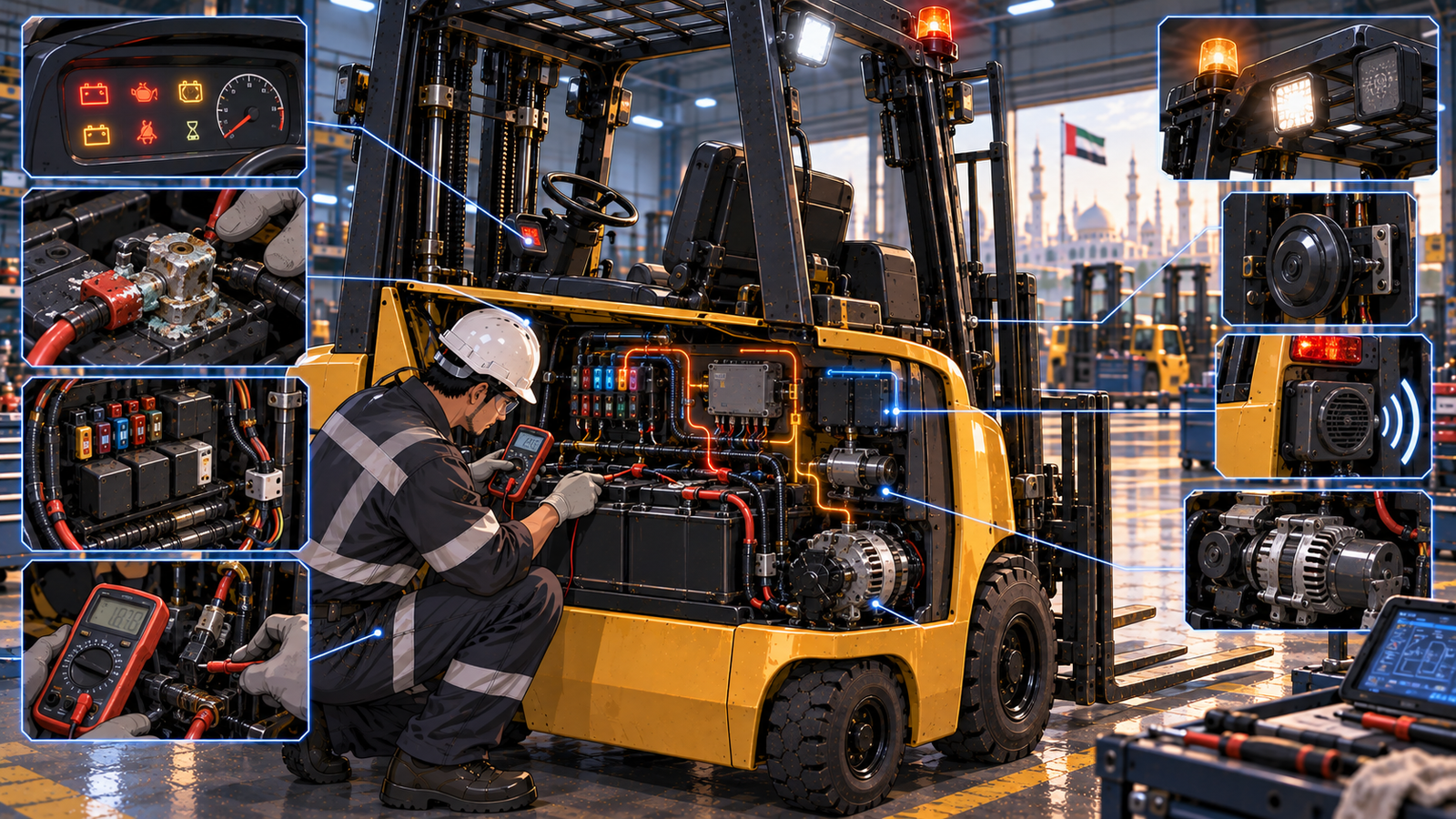
Electrical faults can affect both electric and internal-combustion forklifts.
Common symptoms include:
- Forklift does not start
- Warning lights
- Intermittent electrical operation
- Lights not working
- Horn failure
- Battery discharge
- Charging problems
- Error indicators
- Unresponsive controls
Possible causes include:
- Weak battery
- Corroded terminals
- Loose connections
- Damaged wiring
- Blown fuse
- Faulty relay
- Sensor failure
- Charging-system problems
- Controller-related faults
Electrical diagnosis should begin with basic power and connection checks before moving toward sensors, controllers, or other electronic components.
08/
Forklift Brake and Steering Problems
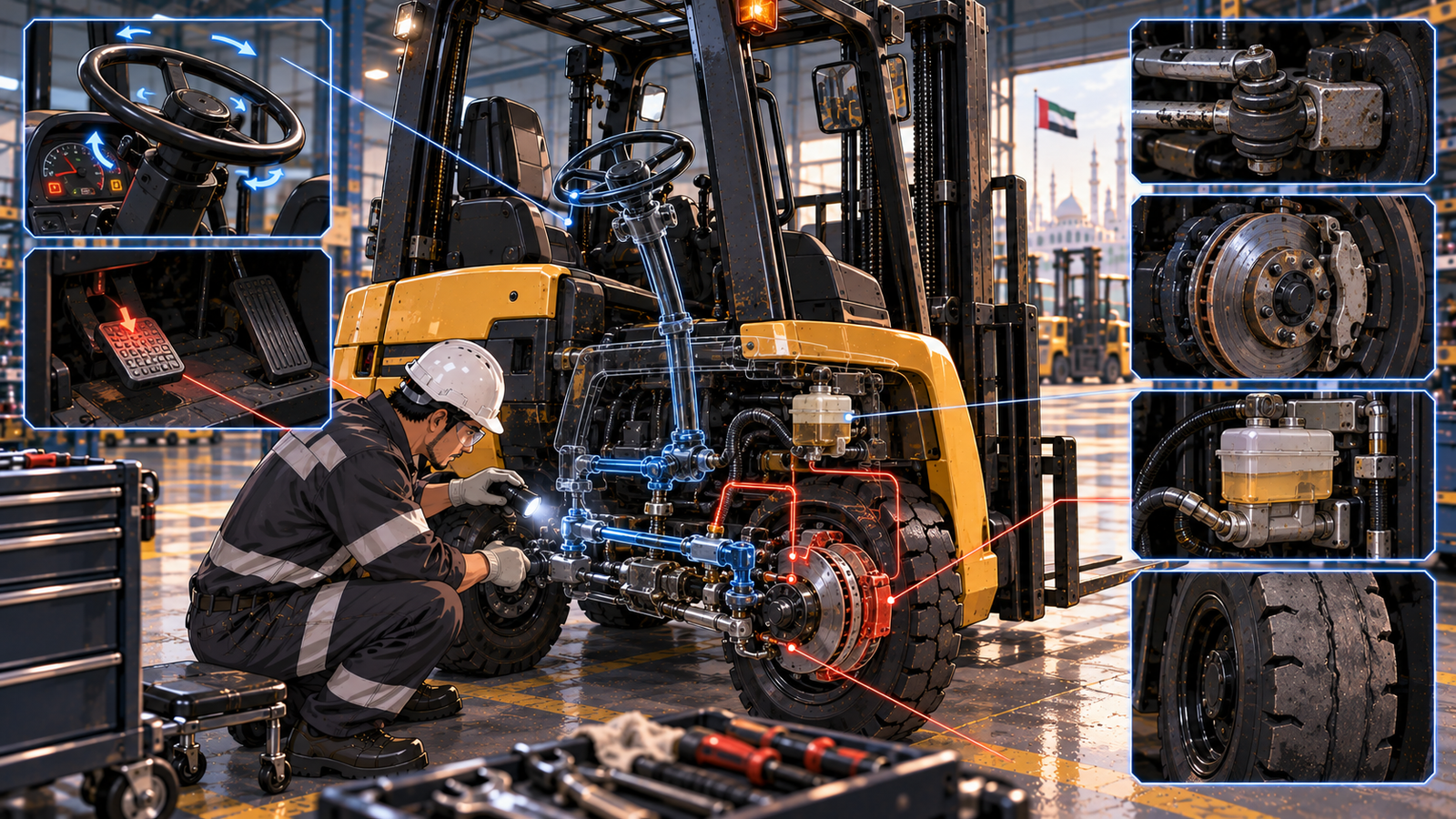
Braking and steering systems require particular attention because they directly affect machine control.
Warning signs can include:
- Increased braking distance
- Brake pedal changes
- Parking brake not holding properly
- Steering play
- Steering becoming difficult
- Uneven steering response
- Unusual noise during steering
The specific inspection procedure depends on the forklift design.
Mechanical linkage, hydraulic steering components, brake components, tyres, and related assemblies should be inspected when abnormal behaviour occurs.
09/
Forklift Mast and Fork Problems
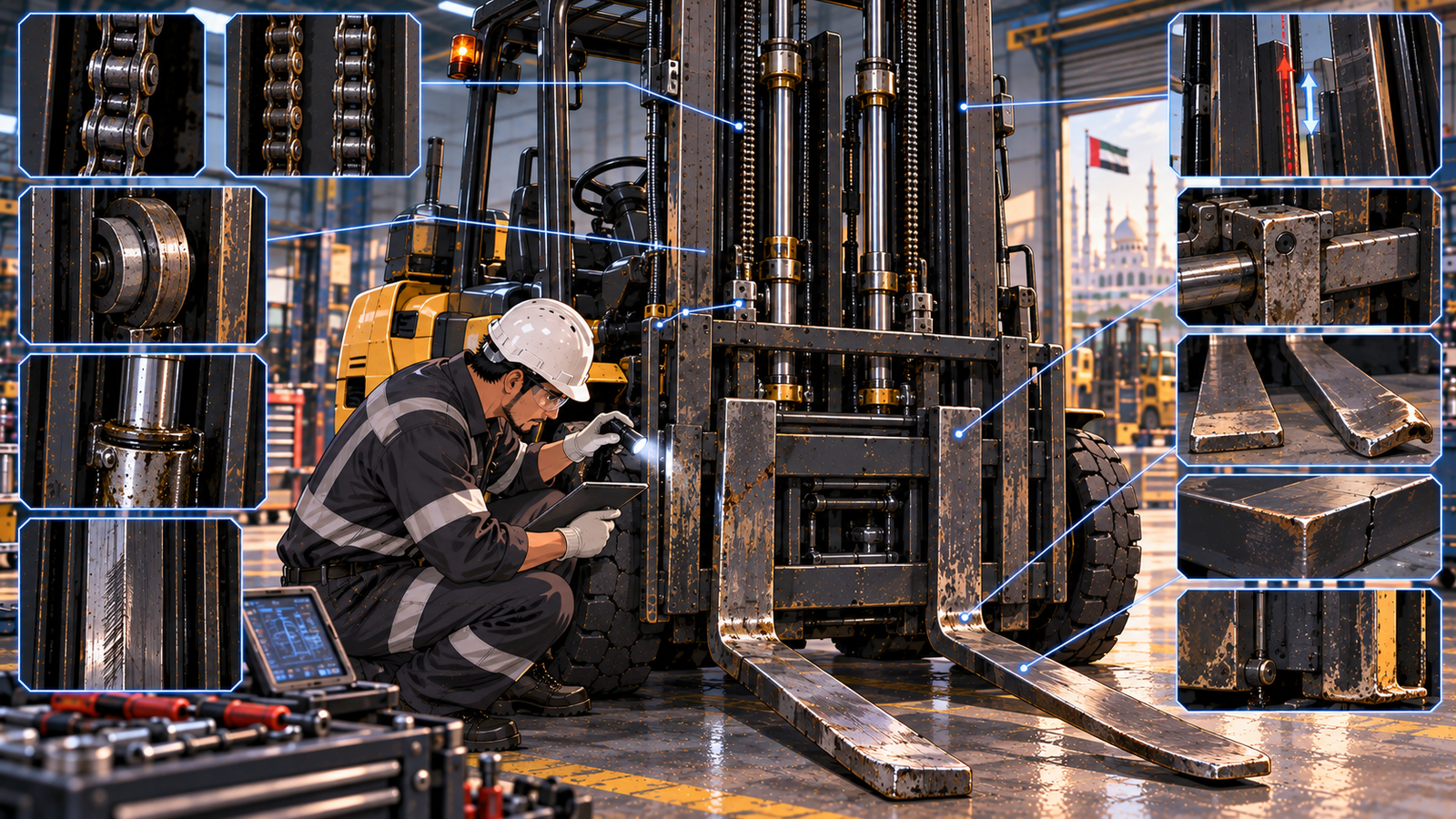
The forks and mast assembly are exposed to repeated loading and movement.
Inspection should consider:
- Fork condition
- Fork heel wear
- Fork locking mechanisms
- Mast chains
- Chain tension/condition
- Rollers
- Rails
- Hydraulic cylinders
- Mounting points
- Attachments
Visible cracks, deformation, excessive wear, damaged locking mechanisms, or other abnormal conditions should be addressed before continued operation.
10/
Forklift Preventive Maintenance
Preventive maintenance should be based on the manufacturer’s maintenance schedule, operating hours, machine condition, and operating environment.
A typical maintenance program may include several levels.
Daily Maintenance
- Depending on the machine:
- Visual inspection
- Leak inspection
- Fluid-level checks
- Fork inspection
- Mast inspection
- Tyre inspection
- Battery inspection
- Safety-device checks
- Basic operational checks
Weekly Maintenance
- Depending on manufacturer requirements:
- Lubrication
- Battery inspection
- Hydraulic system inspection
- Chain and mast inspection
- Tyre condition
- Mechanical fasteners
- Cooling-system inspection
Periodic Maintenance
- At prescribed operating intervals, maintenance may include:
- Engine oil replacement
- Oil filter replacement
- Fuel filter replacement
- Air filter inspection/replacement
- Hydraulic filter servicing
- Hydraulic oil inspection
- Transmission service
- Cooling-system service
- Brake inspection
- Steering inspection
- Mast and chain inspection
- Electrical-system inspection
The actual interval should always follow the forklift manufacturer’s maintenance documentation.
11/
Forklift Maintenance Checklist
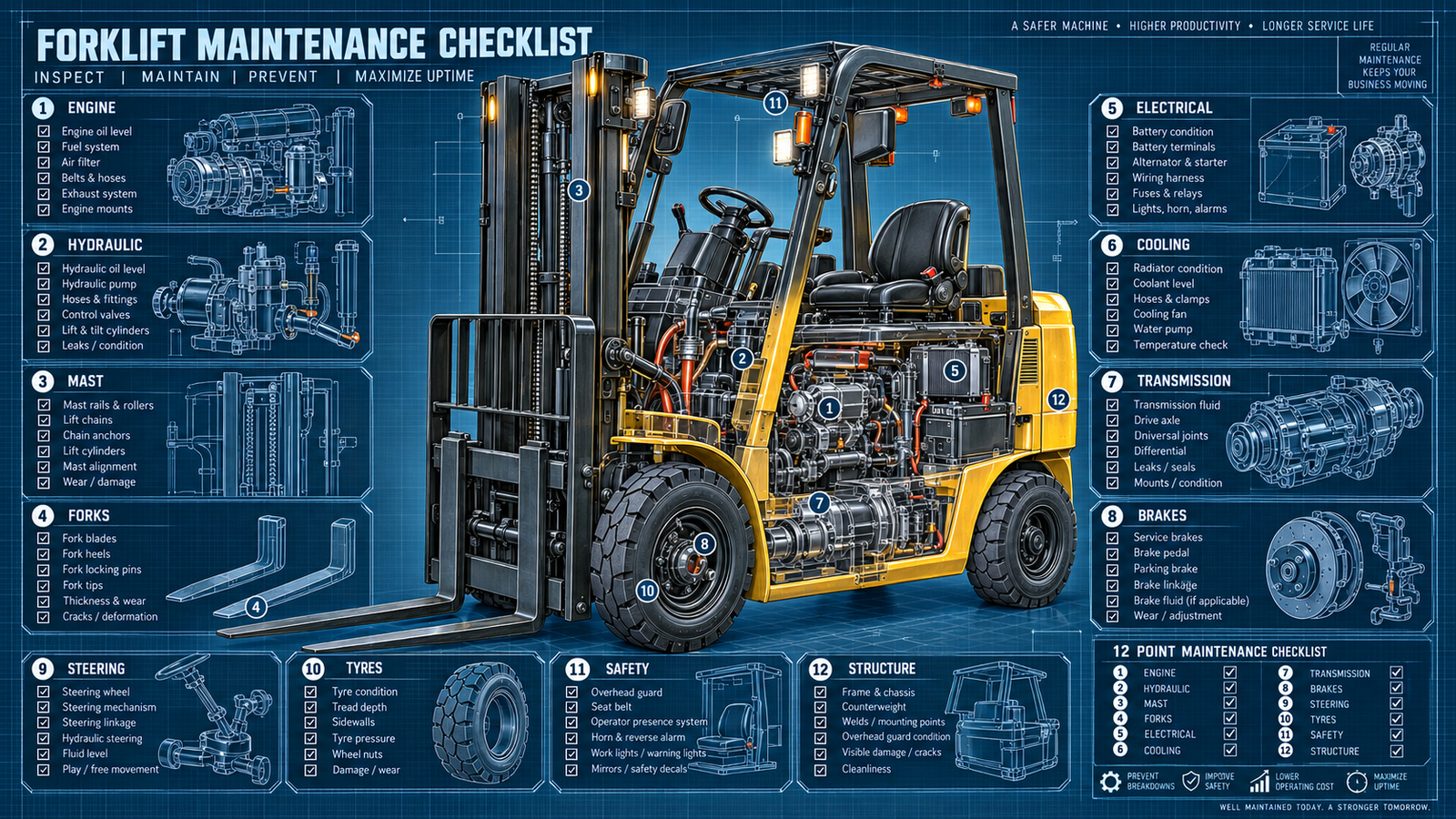
A structured checklist can help maintenance teams monitor the condition of the machine.
| System | Maintenance Items |
|---|---|
| Engine | Oil, filters, belts, hoses, cooling system |
| Hydraulic | Oil, filter, pump, hoses, cylinders, valves |
| Mast | Chains, rollers, rails, cylinders |
| Forks | Wear, cracks, locking mechanism, alignment |
| Electrical | Battery, cables, terminals, fuses, sensors |
| Cooling | Coolant, radiator, fan, hoses |
| Transmission | Fluid, leaks, drivetrain |
| Brakes | Brake performance, components, adjustment |
| Steering | Linkages, hydraulic components, tyres |
| Tyres | Wear, damage, pressure where applicable |
| Safety | Horn, alarms, lights, controls, safety devices |
| Structure | Frame, guards, mounting points, visible damage |
This checklist is a general maintenance reference and should be adapted to the specific forklift manufacturer’s requirements.
12/
Forklift Maintenance in Abu Dhabi Conditions
Operating conditions can influence maintenance requirements.
Abu Dhabi’s industrial and construction environments can expose machinery to high temperatures, dust, sand, extended operating periods, and demanding workloads.
These conditions can increase the importance of monitoring certain systems.
Cooling System
High ambient temperatures can place additional demands on the cooling system.
Regular attention should be given to:
- Radiator cleanliness
- Coolant level
- Cooling hoses
- Fan operation
- Belts
- Airflow
Air and Fuel Filtration
Dusty operating environments can increase the importance of maintaining clean filtration systems.
A restricted air filter can affect engine performance, while contaminated fuel or filtration problems can affect fuel-system operation.
Hydraulic System
Hydraulic oil condition and system cleanliness should be monitored carefully.
Maintenance should consider:
- Oil condition
- Filter condition
- Leaks
- Hose condition
- Cylinder seals
- Operating temperature
- Hydraulic pressure
Battery and Electrical Systems
For electric forklifts, battery condition and charging practices are important aspects of routine maintenance.
Battery terminals, cables, connectors, charging systems, and associated electrical components should be inspected according to the equipment manufacturer’s procedures.
13/
When Should a Forklift Be Professionally Inspected?
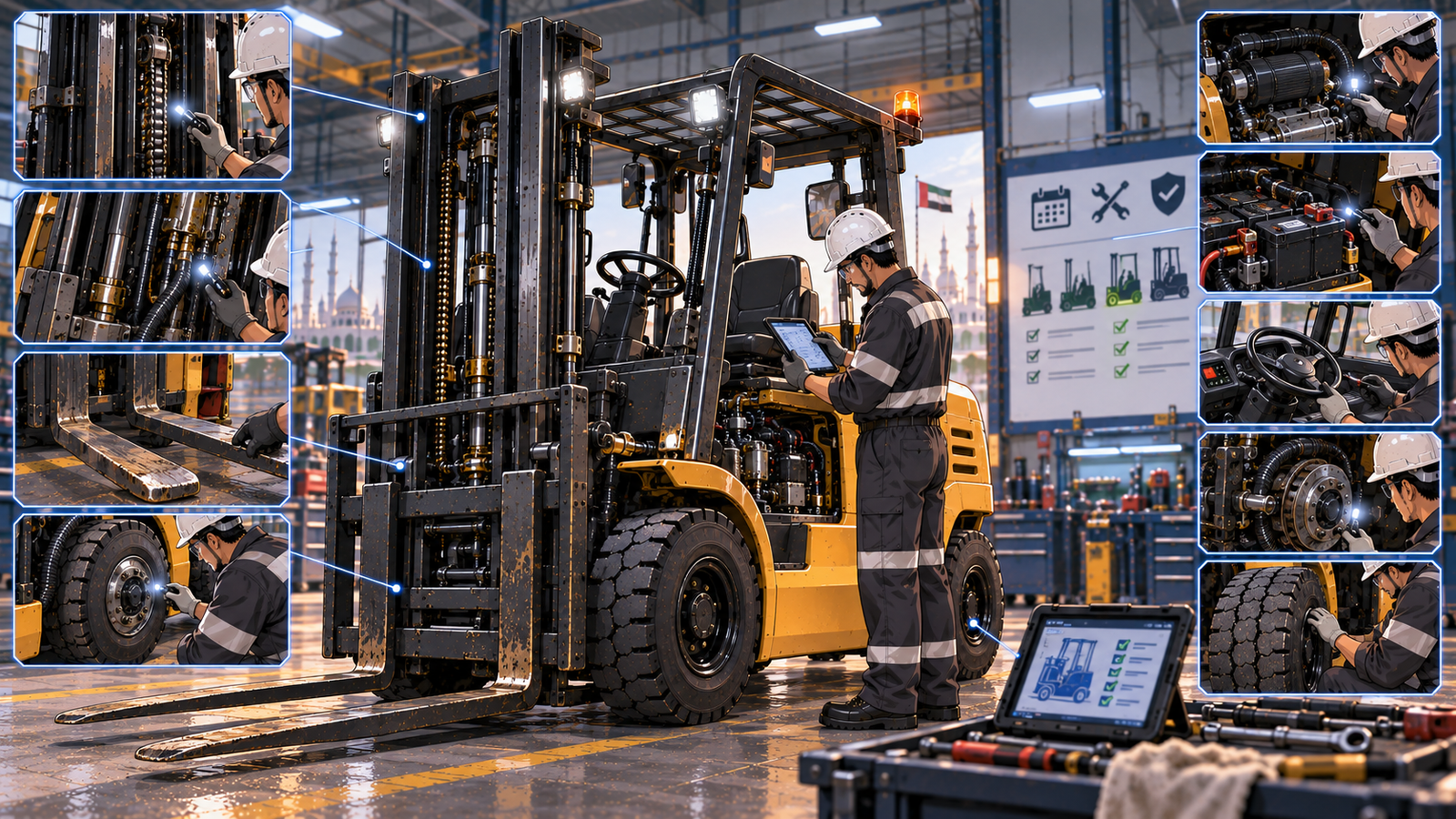
Professional inspection should be considered when a forklift develops a persistent or unexplained problem.
Examples include:
- Hydraulic lifting becomes significantly slower
- Forks cannot maintain position
- Hydraulic oil repeatedly leaks
- Pump noise develops
- Engine repeatedly overheats
- Forklift loses power
- Steering becomes difficult
- Braking performance changes
- Electrical faults repeatedly occur
- Warning or fault codes appear
- The same component repeatedly fails
- Abnormal vibration or noise develops
Repeated failures are particularly important.
If the same hose, seal, pump, electrical component, or other part repeatedly fails, replacing the component without investigating the underlying cause may not resolve the problem.
14/
Forklift Troubleshooting: Why Root-Cause Diagnosis Matters
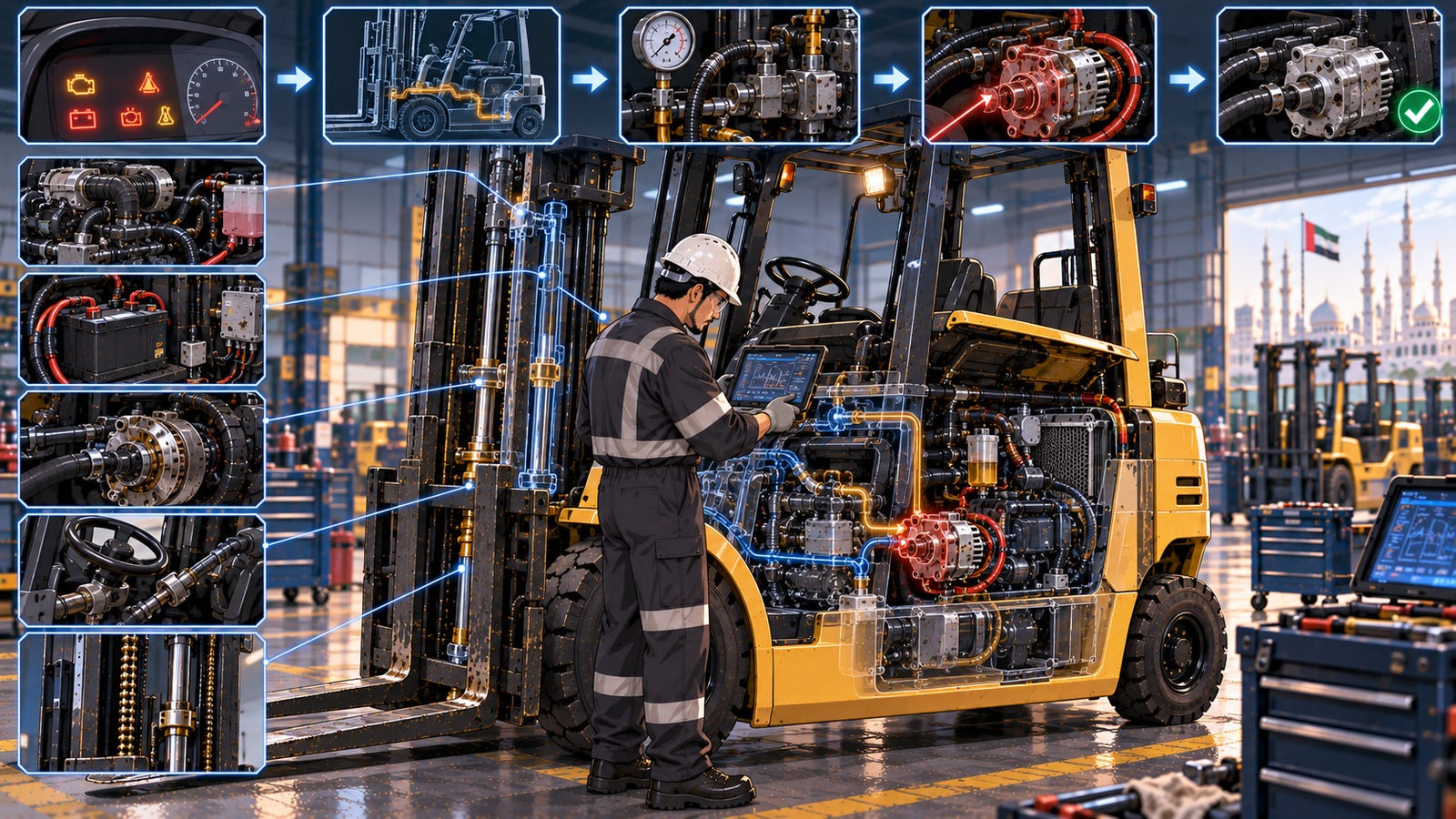
A forklift symptom does not always identify the failed component.
For example:
Symptom: Forklift lifting slowly
Possible causes could include:
- Low hydraulic oil
- Restricted filter
- Hydraulic pump wear
- Incorrect pressure
- Control valve problem
- Cylinder leakage
- Hydraulic restriction
Replacing the pump immediately may therefore be unnecessary if the actual problem is a restricted filter or incorrect system pressure.
A structured diagnostic process normally progresses from:
Symptom → Inspection → Testing → Diagnosis → Repair → Verification
This approach helps reduce unnecessary component replacement and provides a clearer understanding of the machine’s condition.
15/
Repair or Replace the Forklift Component?
Not every faulty component automatically requires replacement of the complete assembly.
Depending on the component and condition, technicians may need to determine whether the appropriate solution is:
- Adjustment
- Cleaning
- Seal replacement
- Hose replacement
- Component repair
- Component rebuilding
- Component replacement
- Complete assembly replacement
- The decision depends on factors such as component condition, availability of parts, repair feasibility, operating requirements, machine age, and the manufacturer’s specifications.
- For hydraulic pumps, cylinders, valves, transmissions, and other major components, proper inspection and testing should be performed before deciding on the repair strategy.
16/
How Regular Forklift Maintenance Helps Reduce Downtime
- Unplanned forklift downtime can interrupt material-handling operations.
- A preventive maintenance program helps maintenance teams identify developing problems before they become unexpected operational failures.
- A practical maintenance strategy can include:
- Inspect → Record → Service → Test → Monitor
- Maintenance records can also help identify recurring problems.
- For example, if a forklift repeatedly experiences hydraulic overheating, maintenance records can help establish whether the issue is related to:
- Operating conditions
- Cooling problems
- Hydraulic oil condition
- Excessive system load
- Component wear
- Maintenance intervals
This makes maintenance more data-driven rather than purely reactive.
17/
Professional Forklift Maintenance & Repair in Abu Dhabi
Forklifts require coordinated maintenance across hydraulic, mechanical, electrical, engine, cooling, steering, braking, and lifting systems.
At Al Baraka Machinery Maintenance L.L.C, our machinery maintenance approach focuses on systematic inspection, troubleshooting, preventive maintenance, and repair support for equipment operating in demanding industrial environments.
Our capabilities can support areas such as:
- Forklift maintenance
- Forklift troubleshooting
- Hydraulic system inspection
- Hydraulic leak diagnosis
- Hydraulic component repair
- Electrical troubleshooting
- Mechanical maintenance
- Engine-related maintenance
- Preventive maintenance
- Breakdown support
- Component inspection
- General heavy machinery maintenance
- The objective is not simply to replace a failed component. Proper troubleshooting should first establish the underlying cause and determine the appropriate repair approach.
- For businesses operating forklifts in Abu Dhabi and the surrounding UAE industrial environment, planned maintenance can help improve equipment reliability and reduce avoidable downtime.
18/
Final thoughts
- Forklift maintenance should be treated as an ongoing process rather than something performed only after a machine breaks down.
- Regular inspection of the hydraulic system, engine, electrical components, mast, forks, brakes, steering, tyres, cooling system, and drivetrain can help identify developing problems before they become more serious.
- Preventive maintenance is particularly important for forklifts operating in demanding environments where machines may experience high temperatures, dust, heavy workloads, and long operating hours.
- When a forklift develops a problem, systematic troubleshooting is equally important. A symptom such as slow lifting, hydraulic leakage, poor engine performance, or electrical failure can have several possible causes.
- The correct approach is to inspect, test, identify the root cause, repair the affected system, and verify the result.
- A well-maintained forklift is better positioned to deliver consistent performance, reduce unexpected downtime, and support reliable material-handling operations.
Need Heavy Equipment Repair or Maintenance Support in Abu Dhabi?
Contact Al Baraka Machinery Maintenance L.L.C to discuss your equipment, maintenance requirements, or repair needs.