
Excavator Hydraulic Problems: Common Causes & Troubleshooting
The hydraulic system is one of the most important systems on a modern excavator. It converts engine power into hydraulic power that allows the machine to perform functions such as digging, lifting, swinging, boom movement, arm movement, bucket operation, and travel.
When the hydraulic system begins to develop a fault, the symptoms can range from slow machine movements and reduced digging performance to hydraulic oil leakage, overheating, abnormal pump noise, or complete loss of hydraulic function.
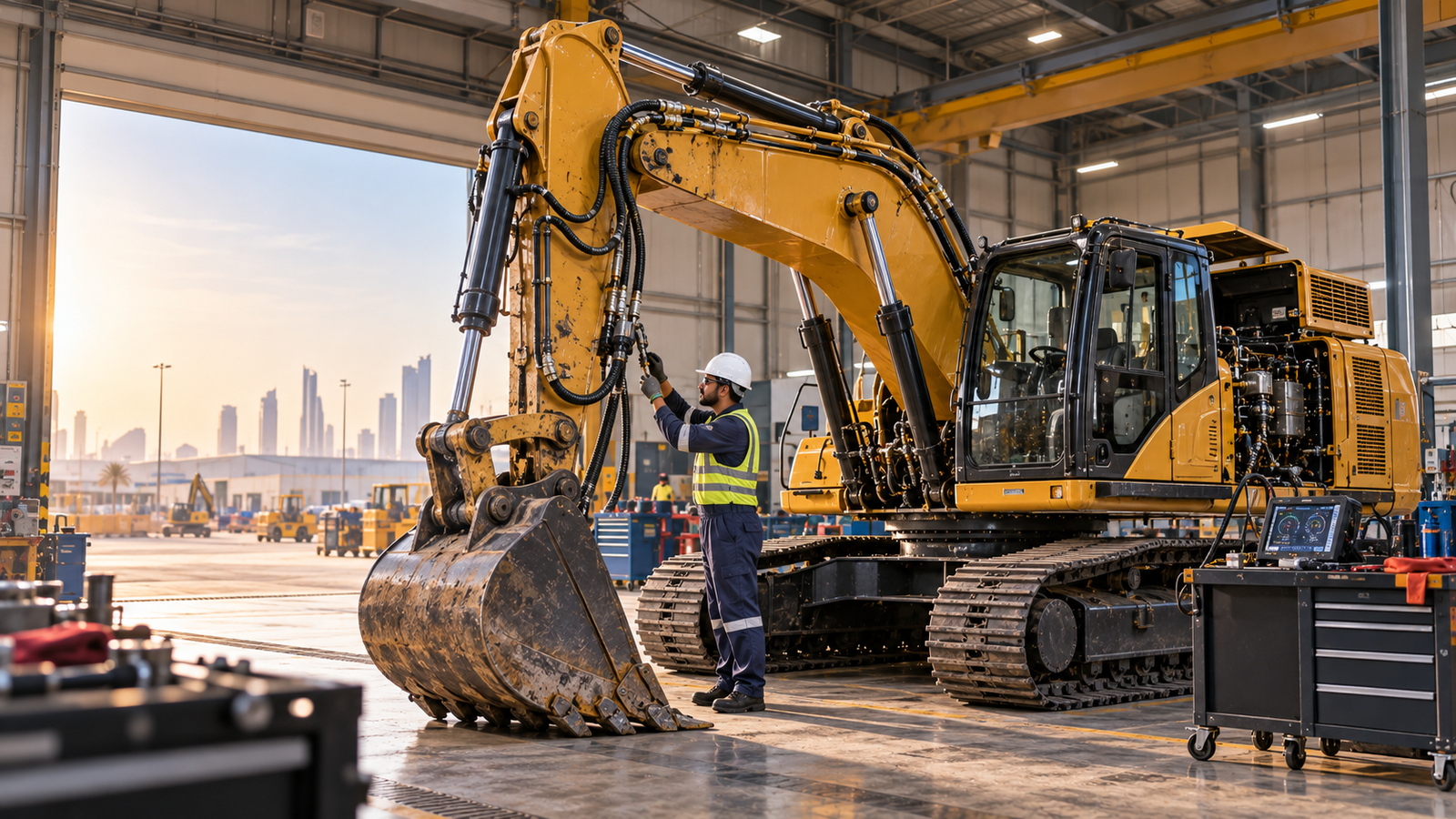
- However, a hydraulic symptom does not necessarily identify the failed component.
- For example, an excavator that operates slowly may have a problem with hydraulic pressure, oil condition, filtration, pump performance, control valves, internal leakage, or another part of the hydraulic circuit.
- This is why proper diagnosis is important before replacing major hydraulic components.
- At Al Baraka Machinery Maintenance L.L.C., we support inspection, troubleshooting, repair, and maintenance of excavators and hydraulic equipment in Abu Dhabi.
01/
How an Excavator Hydraulic System Works

Before troubleshooting a hydraulic problem, it is useful to understand the basic relationship between the major components.
A typical excavator hydraulic system includes several interconnected components.
- Hydraulic Pump:
- The hydraulic pump converts mechanical power from the engine into hydraulic flow.
- Pump performance has a direct effect on the machine’s hydraulic functions.
- Hydraulic Oil:
- Hydraulic oil transfers energy through the system while also providing lubrication and helping control heat.
- The correct oil type, level, cleanliness, and condition are important to system performance.
- Control Valves:
- Control valves direct hydraulic flow to the appropriate actuator according to the operator’s commands.
- Problems within the valve assembly can affect individual or multiple machine functions.
- Hydraulic Cylinders:
- Hydraulic cylinders convert hydraulic pressure into linear mechanical movement.
- They are responsible for functions such as boom, arm, and bucket movement.
- Hydraulic Motors:
- Hydraulic motors convert hydraulic energy into rotary movement.
- Depending on the excavator design, hydraulic motors are used for functions such as swing and travel.
- Filters:
- Hydraulic filters help remove contaminants from the hydraulic fluid.
- A restricted filter can affect hydraulic flow and contribute to system performance problems.
- Hoses, Pipes and Fittings:
- These components transport hydraulic fluid between the system’s various components.
- Leaks, restrictions, damage, or loose connections can affect system performance and reliability.
- Hydraulic Reservoir:
- The reservoir stores hydraulic oil and forms part of the system’s fluid management and heat-control arrangement.
02/
Common Excavator Hydraulic Problems

Hydraulic problems can appear in several different ways.
The symptom is important because it helps narrow down the diagnostic process.
- Excavator Hydraulics Are Slow
One of the most common complaints is that the excavator’s hydraulic functions have become slower than normal.
The operator may notice that:
- The boom moves slowly
- The arm responds slowly
- The bucket takes longer to operate
- Swing movement is slower than usual
- Travel performance is affected
- Multiple hydraulic functions become sluggish
Possible causes can include:
- Low hydraulic oil level
- Restricted hydraulic filter
- Incorrect or degraded hydraulic oil
- Hydraulic pump performance problems
- Excessive internal leakage
- Control valve problems
- Hydraulic circuit restrictions
- Excessive operating temperature
However, the exact cause should be established through inspection and testing rather than assuming the pump has failed.
- Excavator Has Weak Hydraulic Power
An excavator may still move normally but lack the hydraulic force required for demanding work.
For example, the machine may struggle to:
- Lift heavy loads
- Dig into hard material
- Operate the bucket under load
- Maintain expected hydraulic performance
- Perform certain functions at normal working speed
Possible causes include:
- Insufficient hydraulic pressure
- Hydraulic pump wear
- Relief valve problems
- Internal leakage
- Control valve problems
- Hydraulic oil problems
- Engine power or operating issues affecting available hydraulic output
A pressure test and systematic inspection can help determine whether the problem originates from the pump, valve system, actuator, or another part of the hydraulic circuit.
- Hydraulic Oil Leakage
Hydraulic leaks should never be ignored.
Common leak locations include:
- Hydraulic hoses
- Hose fittings
- Hydraulic cylinders
- Pump seals
- Valve assemblies
- Hydraulic motors
- Pipe connections
- Reservoir connections
A small leak can gradually reduce the hydraulic oil level and eventually affect system operation.
A leak can also allow contamination to enter the system depending on its location and operating conditions.
What should be checked?
A proper inspection should identify:
- The location of the leak
- The source of the leakage
- Whether the component is damaged
- Whether the connection is loose or damaged
- Whether a seal or hose requires replacement
- Whether the hydraulic oil level or condition has been affected
Cleaning the affected area and identifying the actual source is important because hydraulic oil can travel along components and make the apparent leak location misleading.
- Excavator Hydraulic System Overheating
Excessive hydraulic temperature can indicate that the system is converting too much energy into heat.
Potential contributing factors include:
- Excessive system pressure
- Restricted hydraulic flow
- Internal leakage
- Contaminated or unsuitable hydraulic oil
- Cooling-system problems
- Excessive operating load
- Hydraulic component inefficiency
If an excavator repeatedly operates at excessive hydraulic temperatures, continued operation without diagnosis can increase component wear.
The correct approach is to determine why the system is generating or retaining excessive heat, rather than simply replacing the hydraulic oil.
- Hydraulic Pump Making Unusual Noise
Unusual noise from the hydraulic pump should be investigated promptly.
Depending on the hydraulic system design, possible causes may include:
- Low hydraulic oil level
- Air entering the hydraulic circuit
- Suction-side restriction
- Cavitation
- Pump wear
- Incorrect oil condition
- Mechanical problems associated with the pump drive
A noisy hydraulic pump does not automatically mean that the pump needs replacement.
The suction circuit, oil level, connections, filters, operating conditions, and pump condition should be evaluated.
- Hydraulic Cylinder Moving Slowly or Drifting
A hydraulic cylinder that moves slowly or does not hold its position correctly may have several possible causes.
These can include:
- Internal cylinder leakage
- Damaged seals
- Hydraulic pressure problems
- Control valve leakage
- Hydraulic oil problems
- External leakage
- Mechanical loading or binding
For example, cylinder drift can be associated with internal leakage, but the hydraulic circuit controlling the cylinder should also be considered during diagnosis.
- One Hydraulic Function Works Poorly
Sometimes the problem affects only one particular function.
For example:
- The boom works normally, but the bucket is slow.
- Or, The swing function is weak while other functions appear normal.
This is useful diagnostic information.
When only one function is affected, technicians can investigate the components and hydraulic circuits associated specifically with that function.
Possible areas include:
- Control valve section
- Hydraulic cylinder
- Hydraulic motor
- Associated hoses
- Pilot/control circuit
- Local restriction
- Internal leakage
The exact diagnostic path depends on the excavator’s hydraulic architecture.
- Multiple Hydraulic Functions Become Weak
When several hydraulic functions are affected simultaneously, the diagnostic approach changes.
Potential areas to investigate include:
- Main hydraulic pump performance
- Hydraulic oil level
- Hydraulic filters
- Main relief system
- Common control components
- Hydraulic pressure
- Engine operating performance
- System contamination
- Internal leakage
Because several functions are affected, technicians should investigate components shared by those functions rather than immediately replacing an individual actuator.
03/
How to Diagnose Excavator Hydraulic Problems
Hydraulic troubleshooting should be systematic.
Replacing components based only on symptoms can increase repair costs without solving the underlying problem.
A professional diagnostic process can follow a sequence such as the following.
Step 1 — Understand the Operator’s Complaint
Start by establishing exactly what changed.
Important questions include:
- When did the problem begin?
- Is the problem constant or intermittent?
- Does it occur when the machine is cold or hot?
- Does it affect one function or multiple functions?
- Did the problem appear suddenly or gradually?
- Was maintenance recently performed?
- Has a component recently been repaired or replaced?
- Are warning indicators or fault codes present?
The operator’s observations can provide valuable diagnostic information.
Step 2 — Inspect the Hydraulic Oil
Check the hydraulic oil level and condition according to the manufacturer’s specified procedure.
Look for indications of:
- Low oil level
- Abnormal contamination
- Discoloration
- Unusual odor
- Foaming
- Possible water contamination
- Incorrect fluid
The correct hydraulic oil specification should always be determined from the equipment manufacturer’s requirements.
Step 3 — Inspect for External Leaks
Inspect:
- Hoses
- Fittings
- Cylinders
- Pumps
- Motors
- Valves
- Pipes
- Reservoir connections
A visual inspection can often identify obvious leakage, but some faults require additional testing.
Step 4 — Check Hydraulic Filters
A restricted filter can interfere with hydraulic flow.
The inspection should consider:
- Filter service interval
- Filter condition
- Signs of contamination
- Correct filter specification
- Evidence of abnormal debris
If unusual debris is discovered, it can be an indication that the system requires further investigation.
Step 5 — Check Hydraulic Pressure
Hydraulic pressure testing is one of the important diagnostic methods for hydraulic systems.
Technicians can compare measured pressures against the equipment manufacturer’s specifications.
Depending on the system, testing may involve relevant:
- Main system pressure
- Pilot/control pressure
- Relief pressure
- Circuit pressures
The appropriate test points and specifications depend on the excavator model and hydraulic system design.
Step 6 — Evaluate Hydraulic Pump Performance
If pressure or flow problems indicate possible pump performance issues, the pump should be evaluated systematically.
Depending on the equipment, diagnosis may involve assessing:
- Pump pressure
- Flow performance
- Operating temperature
- Noise
- Leakage
- Control response
- Pump drive condition
A pump should not be condemned solely because the machine is slow.
Step 7 — Check Control Valves
Control valves regulate hydraulic flow to different machine functions.
A problem with a valve section can result in:
- Slow operation
- Weak function
- Incorrect movement
- Intermittent operation
- Unwanted hydraulic flow
The valve assembly should be evaluated according to the equipment’s hydraulic circuit and manufacturer specifications.
Step 8 — Check Cylinders and Motors
If the hydraulic supply and control system are functioning correctly, the relevant actuator should be investigated.
For cylinders, this may involve checking:
- External leakage
- Seal condition
- Mechanical damage
- Internal leakage
- Rod condition
For hydraulic motors, diagnosis may involve assessing:
- Pressure
- Leakage
- Operating performance
- Mechanical condition
- Related hydraulic circuits
Step 9 — Identify the Root Cause
The final objective isn’t simply to find a failed component.
It is to identify why the system developed the problem. For Example:
- Hydraulic pump failure
may be the immediate fault, but technicians may also need to determine whether contamination, inadequate lubrication, operating conditions, cavitation, overheating, or another issue contributed to the failure.
Finding the root cause can help reduce the risk of repeat failure.
04/
Common Excavator Hydraulic Symptoms and Possible Causes

| Symptom | Possible Areas to Investigate |
|---|---|
| Slow hydraulic movement | Oil level, filter, pump, pressure, internal leakage, valves |
| Weak digging force | Hydraulic pressure, pump, relief system, engine performance |
| Hydraulic oil leak | Hose, fitting, cylinder, pump, motor, valve, pipe |
| Hydraulic overheating | Pressure, flow restriction, leakage, oil, cooling |
| Pump noise | Oil level, suction restriction, air ingress, cavitation, pump condition |
| Cylinder drift | Cylinder seals, internal leakage, valve leakage, pressure |
| One function weak | Local valve section, actuator, hose, control circuit |
| Multiple functions weak | Pump, common pressure/control components, oil, filters |
| Foaming hydraulic oil | Possible air ingress, oil level/condition, system issue |
| Repeated hydraulic failures | Contamination, overheating, incorrect maintenance, root-cause issue |
Important: These are diagnostic starting points, not definitive diagnoses. The same symptom can have multiple causes depending on the excavator model and hydraulic architecture.
05/
Why Hydraulic Oil Cleanliness Matters
Hydraulic systems operate with close-tolerance components.
Contamination can potentially affect:
- Hydraulic pumps
- Control valves
- Hydraulic motors
- Cylinders
- Filters
- Other precision components
Contaminants may include:
- Dirt
- Dust
- Metal particles
- Water
- Degraded fluid
- Other foreign material
This is why hydraulic maintenance should include appropriate filtration, correct fluid handling, clean servicing practices, and inspection for contamination.
When hydraulic components are serviced, preventing contamination during maintenance is just as important as selecting the correct replacement component.
06/
Preventive Maintenance for Excavator Hydraulic Systems
Hydraulic reliability depends heavily on maintenance practices.
A preventive maintenance program should be based on the equipment manufacturer’s requirements and actual operating conditions.
Important activities can include:
- Check hydraulic oil level
- Maintain the level according to the manufacturer’s specified procedure.
- Inspect hydraulic hoses
- Look For:
- Abrasion
- Cracks
- Bulging
- Damage
- Leakage
- Loose connections
- Inspect cylinders
- Check for:
- Oil leakage
- Rod damage
- Seal problems
- Abnormal movement
- Inspect hydraulic filters:
- Replace filters according to the specified maintenance interval or when required by the equipment’s maintenance procedure.
- Monitor operating temperature:
- Unexpected changes in hydraulic temperature can indicate developing problems.
- Check for unusual noise:
- New pump or hydraulic-system noise should be investigated.
- Maintain cleanliness:
- Avoid introducing dirt or foreign material during hydraulic servicing.
- Record recurring problems:
- Repeated hydraulic failures can provide valuable evidence of an unresolved underlying issue.
07/
When Should an Excavator Hydraulic System Be Professionally Inspected?

Professional inspection is particularly appropriate when the machine develops:
- Sudden loss of hydraulic power
- Repeated hydraulic leakage
- Significant overheating
- Unusual hydraulic pump noise
- Severe loss of operating speed
- Cylinder drift
- Repeated component failure
- Abnormal hydraulic pressure
- Persistent hydraulic contamination
- Warning indicators or diagnostic codes
If the equipment remains operational but its performance has changed, early inspection may help identify the problem before it develops into a more serious failure.
08/
Repair or Replace the Hydraulic Component?
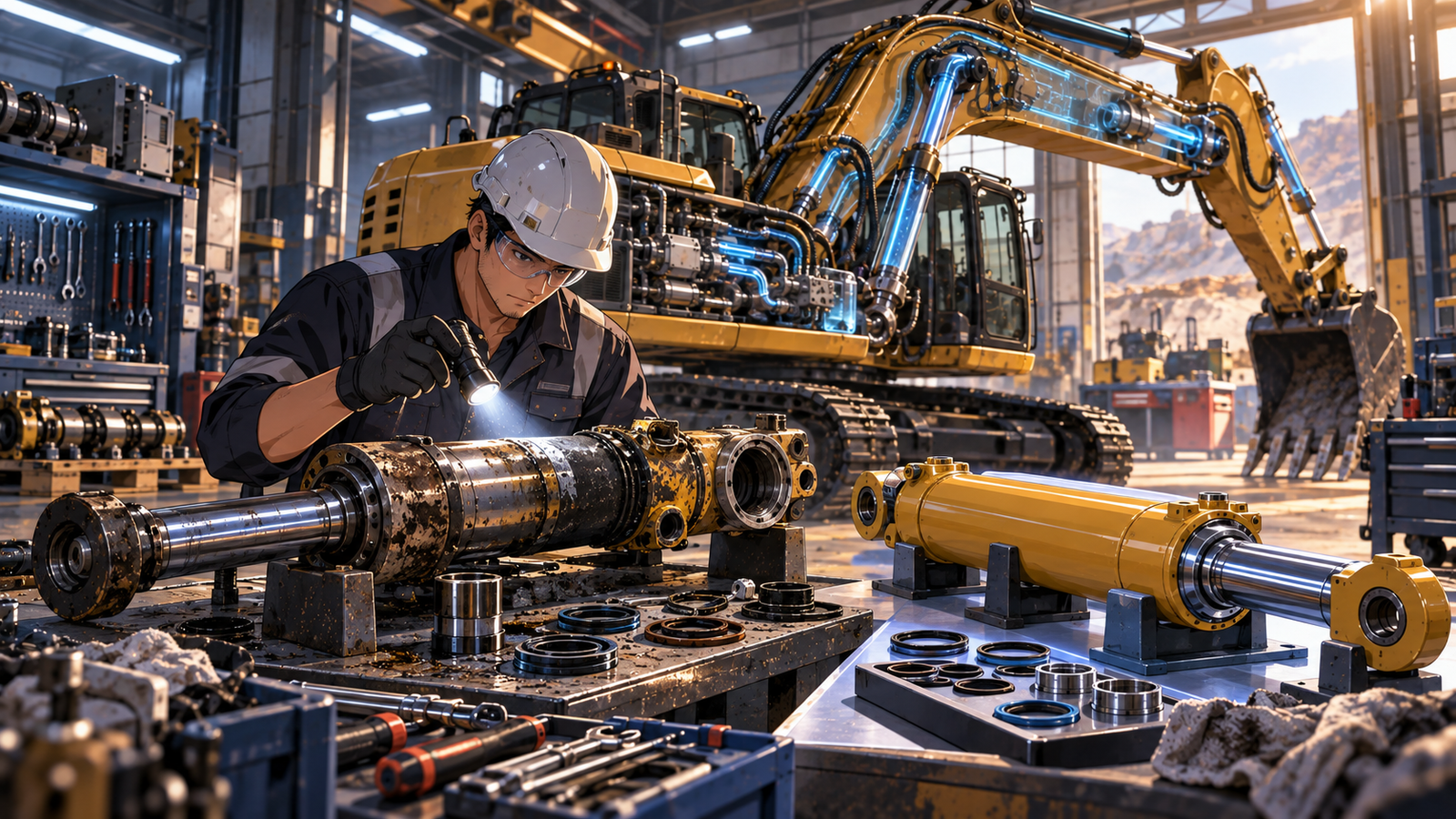
A hydraulic component should not automatically be replaced simply because it is associated with a symptom.
Depending on the inspection findings, the appropriate solution may involve:
- Adjustment
- Seal replacement
- Hose replacement
- Filter replacement
- Hydraulic oil service
- Component repair
- Component rebuilding
- Component replacement
- System flushing or contamination control
- Further diagnostic testing
The correct option depends on the component’s actual condition, repairability, equipment requirements, operating conditions, and overall repair economics.
09/
Excavator Hydraulic Maintenance in Abu Dhabi
Excavators operating in Abu Dhabi and across the UAE can work in demanding construction, infrastructure, industrial, and other environments.
Dust, high ambient temperatures, extended operating periods, and heavy workloads can place additional demands on machinery.
However, maintenance intervals should not be based on climate alone. A suitable maintenance program should consider:
- Manufacturer recommendations
- Operating hours
- Equipment age
- Workload
- Site conditions
- Maintenance history
- Hydraulic oil condition
- Previous component failures
Regular inspections can help identify developing problems before they result in significant equipment downtime.
10/
How Al Baraka Machinery Maintenance Can Help
Al Baraka Machinery Maintenance L.L.C. provides machinery maintenance and repair support in Abu Dhabi, including support for excavators and hydraulic equipment.
Our technical approach can include:
Inspection → Diagnosis → Repair Scope → Maintenance/Repair → Testing
Depending on the equipment and fault, inspection may cover relevant mechanical, hydraulic, electrical, and engine systems.
For hydraulic-related problems, the objective is to establish the likely root cause before determining the appropriate repair scope.
Our equipment support includes excavators and other heavy machinery such as:
- Excavators
- Wheel loaders
- Bulldozers
- Motor graders
- Backhoe loaders
- Forklifts
- Cranes
- Winches
- Generators
- Diesel engines
- Hydraulic power packs
- Oilfield support equipment
For excavator-specific support, see our Excavator Repair & Maintenance service.
12/
Final thoughts
Excavator hydraulic problems can originate from relatively simple maintenance issues or from significant component failures.
Slow hydraulic movements, weak digging performance, leakage, overheating, abnormal pump noise, and cylinder problems should therefore be treated as symptoms requiring diagnosis, rather than automatic evidence of a particular failed component.
A structured troubleshooting process can help identify whether the issue involves:
- Hydraulic oil
- Filtration
- Hoses and fittings
- Hydraulic pressure
- Pumps
- Control valves
- Cylinders
- Motors
- Contamination
- Other related systems
- The most effective approach is to inspect the system, test the relevant hydraulic circuits, identify the root cause, and then establish the appropriate repair scope.
- For businesses operating excavators where equipment availability directly affects productivity, early attention to hydraulic problems can help reduce the risk of extended downtime and unnecessary component damage.
Need Heavy Equipment Repair or Maintenance Support in Abu Dhabi?
Contact Al Baraka Machinery Maintenance L.L.C to discuss your equipment, maintenance requirements, or repair needs.